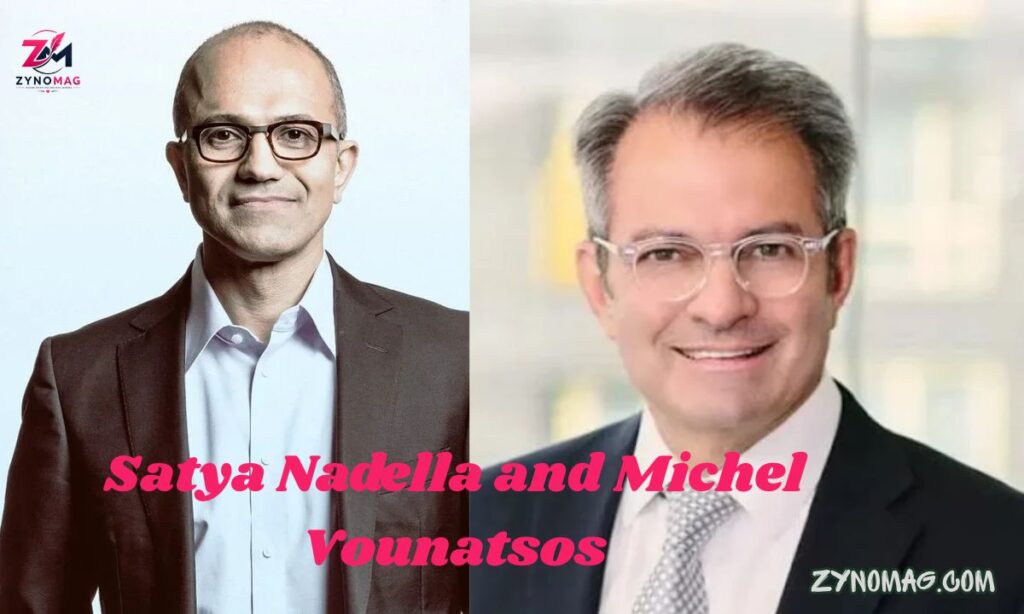

Satya Nadella and Michel Vounatsos are two well-known global leaders. Nadella was born on 19 August 1967 in Hyderabad, India. He became CEO of Microsoft in 2014. Michel Vounatsos is the former CEO of Biogen. His exact date of birth is not public, but a Biogen filing listed his age as 55 in December 2016, which puts his birth year at about 1961. He led Biogen from January 2017.
This guide looks at their Leadership Lessons in a simple way. You will see how they started, how they changed their companies, and how their styles differ. You will also learn what each leader did next. Use these lessons to lead your own team with more clarity and confidence.
Table of Contents
Early Careers and Foundations
Nadella and Vounatsos started far apart. Yet both climbed through the ranks of big companies before they reached the top job. Nadella was born on 19 August 1967 in Hyderabad, India. He studied at Hyderabad Public School.
He then earned an electrical engineering degree at the Manipal Institute of Technology in 1988. He moved to the United States for a master’s degree in computer science at the University of Wisconsin, Milwaukee. Later he earned an MBA at the University of Chicago.
He did this while working full time, and he reportedly flew from Seattle to attend weekend classes. He joined Microsoft in 1992 and helped build Windows NT. Over the next two decades he led business software teams and then the server and tools division.
In 2013 he became head of the Cloud and Enterprise group. Vounatsos took a different route. He studied medicine at the Université Victor Segalen in Bordeaux, France. He then earned an MBA at HEC Paris. That mix of medical knowledge and business training shaped his whole career.
He joined Biogen in April 2016 as executive vice president and chief commercial officer. Biogen named him CEO effective 6 January 2017.
| Detail | Satya Nadella | Michel Vounatsos |
|---|---|---|
| Industry | Software, cloud, AI | Biotechnology, pharma |
| Education | Engineering, computer science, MBA | Medicine certificate, MBA |
| Early employers | Microsoft from 1992 | Ciba-Geigy, then Merck |
| Path to the top | Server and cloud leader | Commercial leader |
| Became CEO | 4 February 2014 | 6 January 2017 |
| Company | Microsoft | Biogen |
Three foundations stand out:
- Both built deep experience inside large companies before leading them.
- Both combined technical training with a business degree.
- Both worked across regions and functions, not in one narrow lane.
Transforming Culture and Strategy
Each leader inherited a company with a strong past and an uncertain future. Their answers were not the same. Nadella succeeded Steve Ballmer in February 2014. He became only the third CEO in Microsoft history, after Bill Gates and Ballmer. He was also the first who was not a founder or an original employee.
His first big move was cultural. He pushed empathy, teamwork and a growth mindset. He asked people to be learn-it-alls instead of know-it-alls. That phrase became a simple test for daily decisions.
Strategy followed culture. Microsoft moved toward a cloud-first approach and grew Azure into a core platform. It added LinkedIn and GitHub through acquisitions. Later it backed OpenAI and rolled out Copilot across its products.
The market responded. Reports note that Microsoft’s stock rose more than 1,000 percent between 2014 and Nadella’s ten-year mark in 2024. In 2021 he also became chairman.
Vounatsos had a harder script. He took over from George Scangos when Biogen faced slowing sales of its multiple sclerosis drug Tecfidera. His stated priorities were clear:
- Win approval for Spinraza, a treatment for spinal muscular atrophy.
- Grow the multiple sclerosis business with new products.
- Move the Alzheimer’s candidate aducanumab forward.
Spinraza became the first approved treatment for spinal muscular atrophy, which Biogen counts as a major win. The Alzheimer’s drug, sold as Aduhelm, went the other way. Its rollout was widely described as turbulent, and sales stayed low.
In 2022 Biogen announced that Vounatsos would step down once a successor was in place. The company also cut commercial support for Aduhelm. Christopher Viehbacher later took over as CEO.
| Area | Nadella at Microsoft | Vounatsos at Biogen |
|---|---|---|
| Starting challenge | Mobile and cloud shift | Slowing multiple sclerosis sales |
| Culture message | Growth mindset | Patient focus and execution |
| Big strategic bet | Cloud, then AI | Neuroscience and Alzheimer’s |
| Notable wins | Azure, LinkedIn, GitHub | Spinraza approval |
| Notable setback | Early mobile struggles | Aduhelm rollout |
The contrast is fair but simple. A cloud platform can scale across many customers. A single drug bet depends on trial results, regulators and doctors. The risk profile of each industry matters when judging both leaders.
Leadership Styles Side by Side
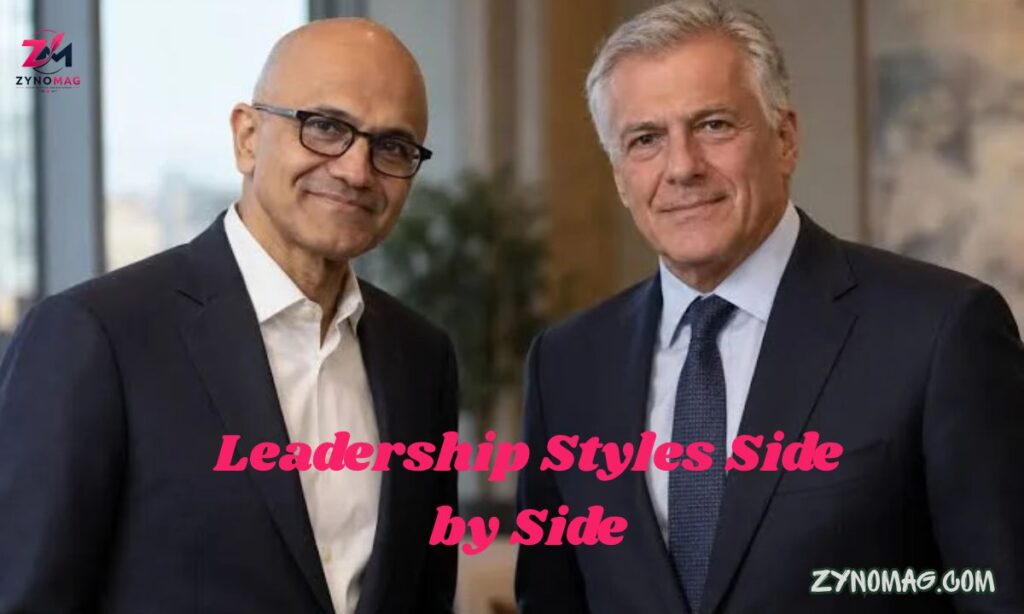
Style is harder to measure than revenue. Public statements, board remarks and press coverage give hints, but they are not a full picture. The table below treats these points as informed reading, not fact.
| Style Trait | Satya Nadella | Michel Vounatsos |
|---|---|---|
| Core theme | Learning and empathy | Commercial discipline and focus |
| Main tool | Culture change | Operational execution |
| Communication | Mission driven and story led | Priority driven and direct |
| View of risk | Big platform bets | Concentrated science bets |
| Team approach | Collaboration across silos | Strong commercial leadership |
| Public image | Calm, curious, humble | Patient focused, results minded |
Nadella often frames his mission as empowering every person and every organization to achieve more. That wording shows how he links culture to purpose. He talks about listening first, then deciding.
Vounatsos came up through commercial roles. When Biogen named him CEO, its board stressed execution and smart use of cash. The board also called him a leader who cares about patients and employees. Those lines describe the board’s view, not an outside review.
Both styles have strengths. A culture-first leader can unlock talent that was stuck. An execution-first leader can steady a company that is losing ground.
Both styles also carry risk:
- Culture work takes years, and investors may lose patience.
- Tight execution can miss a bigger shift in science or technology.
- A single failed launch can overshadow earlier wins.
The lesson is not that one style is right. It is that style must fit the problem in front of the leader.
Current Chapters and Broader Influence
Today, Nadella is Chairman and CEO of Microsoft. His focus is AI and cloud computing across the whole company. He also invests in sports, including a stake in the Seattle Orcas cricket team, a nod to his childhood love of the game.
His influence reaches far beyond Microsoft. His views on AI at work and on reinventing knowledge jobs shape what other CEOs discuss. Many executives cite his growth mindset idea when they talk about culture.
Vounatsos left the CEO chair, but he did not leave the industry. Public announcements list a wide set of roles. These include board seats at companies such as Zai Lab and Takeda, plus advisory roles at firms like Legend Biotech.
Board and advisory roles change often. Check each company’s website for the latest list before you quote it.
| Area | Nadella Today | Vounatsos Today |
|---|---|---|
| Main role | Chairman and CEO of Microsoft | Board member, adviser and founder in biotech |
| Focus | AI, cloud, productivity | Drug development and governance |
| Reach | Global tech industry | Global biotech industry |
| Type of influence | Public company leadership | Boards and mentoring |
The comparison shows a useful point. Influence does not need a CEO title. Vounatsos now shapes many companies at once through governance and advice.
Lessons from Parallel Journeys
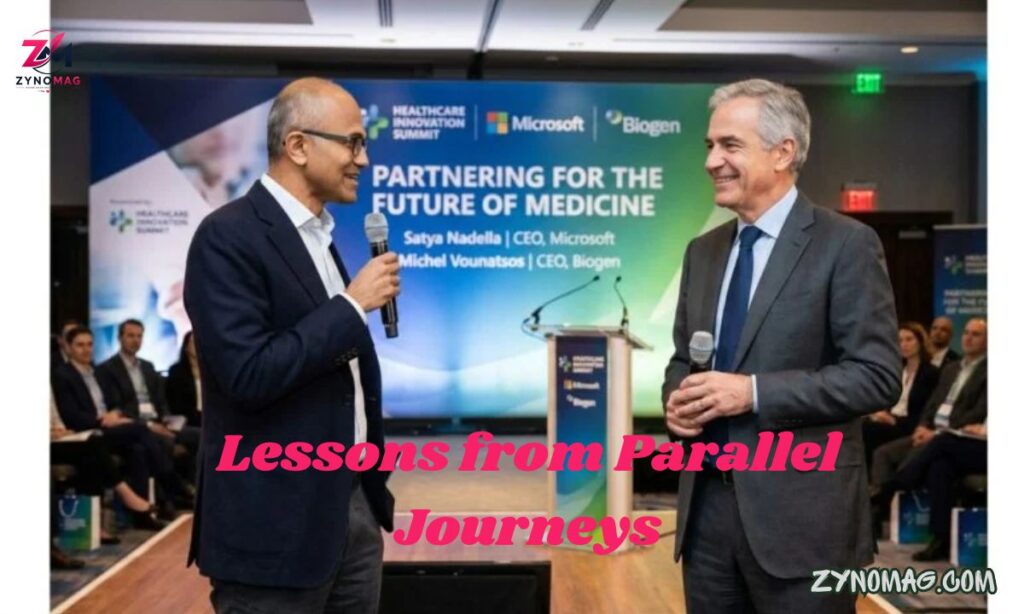
Their careers run in parallel, not together. Still, you can pull practical lessons from each path.
- Fix culture early. Nadella changed how people worked before he changed what Microsoft sold. Habits drive results.
- Pick a clear mission. A short mission statement helps thousands of people decide faster.
- Bet big, but diversify. Microsoft spread its bets across cloud, tools and AI. Biogen leaned hard on a few neuroscience programs.
- Respect your industry’s risk. Software scales fast. Drug development is slow, costly and uncertain.
- Own setbacks in public. Vounatsos stepped aside after a hard launch. Clear accountability protects trust.
- Keep learning. Nadella finished an MBA while working. Vounatsos blended medicine and business. Both kept adding skills.
- Plan the next chapter. Vounatsos moved into boards and advice. A good exit can be a second career.
You can use these ideas in any job. A team lead can apply the culture lesson on Monday. A founder can use the mission lesson in the next pitch.
Frequently Asked Questions
Why Are Satya Nadella and Michel Vounatsos Mentioned Together?
People group them because both led major global companies and both guided them through a reset. Search results and leadership lists also place their names side by side, which adds to the overlap.
What Was the Net Zero NHS Initiative?
It is the NHS plan to cut carbon emissions. The NHS aims for net zero by 2040 for emissions it controls and by 2045 for those it can influence. It became the first health system to embed net zero in law in July 2022.
Did Satya Nadella and Michel Vounatsos Work Together?
No public record shows that they worked at the same company or on a joint project. Nadella has spent his career at Microsoft. Vounatsos worked at Ciba-Geigy, Merck and Biogen.
Comparing Their Leadership Styles and Achievements
Nadella led with culture and platform bets, and Microsoft’s value grew sharply. Vounatsos led with commercial focus, won approval for Spinraza, and faced a hard Aduhelm launch.
Are Satya Nadella and Michel Vounatsos Related?
No public source says they are related. They come from different countries, industries and career paths.
Who Is Michel Vounatsos?
He is the former CEO of Biogen, who led it from January 2017 until a successor took over. He now serves on boards and advisory groups in biotech.
What Is Satya Nadella Best Known For?
He is known as the CEO of Microsoft since 2014. He is credited with a growth mindset culture and a strong push into cloud and AI.
Final Thoughts
Satya Nadella and Michel Vounatsos show two ways to lead through change. Nadella rebuilt culture first and then scaled a platform. Vounatsos pushed commercial discipline in an industry where one trial can change everything. Neither path is a template, but both offer clear lessons on focus, accountability and learning.
When you read about leaders, look past the headlines. Check what they did, what their industry allowed, and what the record actually shows. That habit also helps with searches that mix names and topics, such as the Net Zero NHS query, where no public link between these two leaders exists.