Jerry Speyer and Robert De Niro are two of New York’s best known names. Jerry Speyer was born on June 23, 1940. He is a real estate leader and a founding partner of Tishman Speyer. Robert De Niro was born on August 17, 1943. He is an Oscar winning actor and a cofounder of the Tribeca Festival.
Their link is New York, not a shared business. Speyer shaped the skyline through Rockefeller Plaza and other landmark properties. De Niro shaped the culture through classic films and the Tribeca Festival. This guide explains who each man is, how their careers differ and what connects them.
Table of Contents
Jerry Speyer and Robert De Niro Bio
| Detail | Jerry Speyer | Robert De Niro |
| Born | June 23, 1940, Milwaukee, Wisconsin | August 17, 1943, Manhattan, New York |
| Age in November 2026 | 86 | 83 |
| Main field | Real estate development | Film, producing and directing |
| Best known for | Cofounding Tishman Speyer | Taxi Driver, The Godfather Part II, Tribeca Festival |
| Training | Columbia College and Columbia Business School | HB Studio, Stella Adler Conservatory, Actors Studio |
| Notable honors | Golden Plate Award (1997), Crain’s New York Hall of Fame (2020) | Kennedy Center Honors (2009), Presidential Medal of Freedom (2016), Crain’s New York Hall of Fame (2017) |
| Home base | New York City | New York City |
Who Is Jerry Speyer?
Jerry I. Speyer is an American real estate developer. He is one of two founding partners of Tishman Speyer, a privately held firm based in New York. He also served as chairman of the Federal Reserve Bank of New York and chairman of the Museum of Modern Art.
He sits on the board of Carnegie Hall. He is chair emeritus of the Partnership for New York City and of the Real Estate Board of New York. Forbes included him on its Forbes 400 list in 2021. His son Rob Speyer now runs the company as CEO, while Jerry remains chairman.
Key points about Speyer:
- Founded Tishman Speyer in 1978 with his father in law, Robert Tishman
- Holds leadership roles in major New York cultural and civic groups
- Married Katherine G. Farley in 1991
- Remains an active chairman of the family firm
Jerry Speyer’s Education and Early Career
Speyer was born in Milwaukee. His family moved to New York when he was three months old. His father, a shoe manufacturer, had fled Germany in 1939.
He grew up on Riverside Drive in Manhattan and attended the Horace Mann School. He then studied at Columbia University. He majored in German literature and graduated from Columbia College in 1962.
He earned an MBA from Columbia Business School in 1964. That same year he began his career as an assistant to a vice president at Madison Square Garden.
| Year | Milestone |
| 1940 | Born in Milwaukee, Wisconsin |
| 1962 | Graduates from Columbia College |
| 1964 | Earns MBA and starts at Madison Square Garden |
| 1978 | Forms Tishman Speyer with Robert Tishman |
| 1991 | Marries Katherine G. Farley |
| 2015 | Son Rob becomes sole CEO, Jerry stays chairman |
Jerry Speyer and Tishman Speyer
Tishman Speyer is a global owner, developer and operator of real estate. It was founded in 1978 by Jerry Speyer and Robert Tishman. The firm is based at 45 Rockefeller Plaza in New York.
Its early international work included the Messeturm in Frankfurt. When announced in 1988, it was planned as a 70 story tower and the tallest in Western Europe. The firm also became known for large Manhattan deals.
One example was the 2006 purchase of Stuyvesant Town and Peter Cooper Village. The New York Times covered that deal in a long profile of Jerry and Rob Speyer. In 2015, Rob Speyer became sole CEO. Jerry stayed on as chairman. Reports at the time described the move as a planned handover inside the family.
Jerry Speyer’s Connection to Rockefeller Center
Rockefeller Center is the strongest link between Speyer and the heart of Midtown. Tishman Speyer has its headquarters at 45 Rockefeller Plaza. A 2015 report on Rob Speyer’s promotion listed Rockefeller Center and the Chrysler Building among the firm’s best known assets.
Speyer’s ties go beyond property. He worked closely with David Rockefeller through the Museum of Modern Art. He later became chair emeritus of the Partnership for New York City, a group David Rockefeller founded.
Ownership of famous buildings can change over time. For the current owner of any property, check recent filings and company statements. The lesson is simple. For Speyer, Rockefeller Center is both an address and a long relationship with New York’s business elite.
Who Is Robert De Niro?
Robert Anthony De Niro is an American actor, producer and director. He was born in Manhattan on August 17, 1943. He is one of the most celebrated screen actors of his generation.
He is a two time Oscar winner. His first win came for The Godfather Part II, where he played the young Vito Corleone. He later won Best Actor for Raging Bull.
He has made nine feature films with director Martin Scorsese. Six of his films have been added to the National Film Registry. He received the Kennedy Center Honors in 2009 and the Presidential Medal of Freedom in 2016.
Robert De Niro and Tribeca
Tribeca is a Lower Manhattan neighborhood. For De Niro, it is also home turf. He lived in the area for much of his adult life and saw it change from an industrial zone into a lively community.
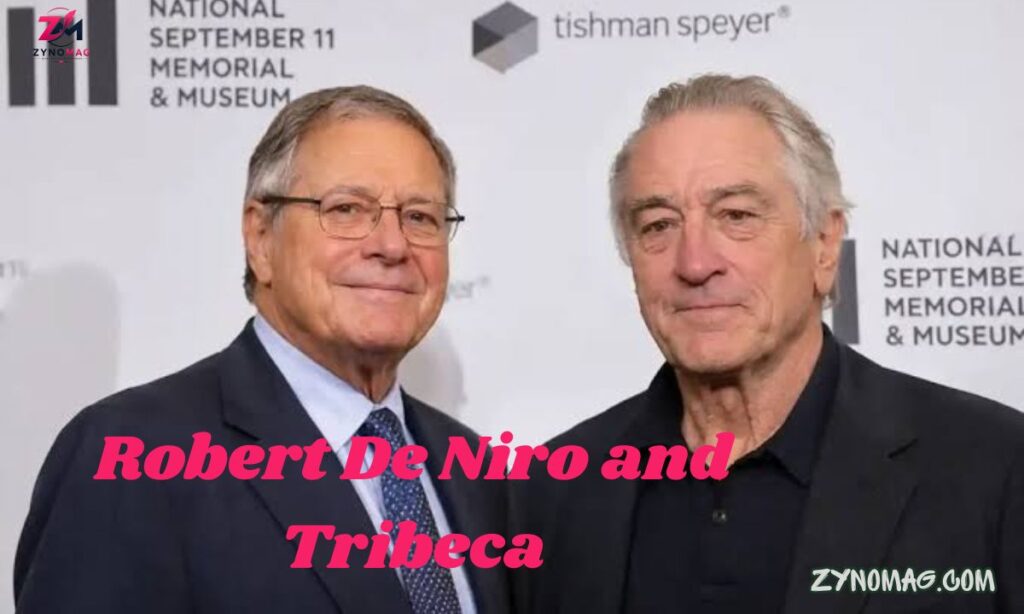
After the attacks of September 11, 2001, the neighborhood suffered badly. Foot traffic dropped. Businesses struggled. Residents felt the loss every day. De Niro and producer Jane Rosenthal wanted to help.
Their answer was a film festival that would bring people back downtown. He has said that after 9/11 they felt they had to do something and believed movies could bring people together. That decision tied his name to the neighborhood for good.
The Tribeca Festival and Robert De Niro
The festival was founded by Robert De Niro, Jane Rosenthal and Craig Hatkoff. Its stated purpose was to support the economic and cultural revival of Lower Manhattan.
The first edition ran in spring 2002. It screened about 150 films from dozens of countries. Over time it grew beyond film into television, music, audio storytelling, games and immersive work.
In 2019, James Murdoch’s Lupa Systems bought a majority stake in Tribeca Enterprises. De Niro and Rosenthal stayed involved in running the business.
Why this matters:
- It shows De Niro as a civic builder, not only a performer
- It gave independent filmmakers a major New York stage
- It linked entertainment with neighborhood recovery
Tribeca Festival Reaches 25 Years
The 25th Tribeca Festival ran from June 3 to June 14, 2026. Local coverage said the lineup included more than 100 feature films, premieres, talks and reunions.
De Niro took part in a special screening for the 50th anniversary of Taxi Driver. He appeared alongside Martin Scorsese and Jodie Foster. Reports also noted that he said he was surprised the festival was still going after a quarter century.
A documentary called Tribeca 25, directed by Matt Tyrnauer, was announced for Netflix on September 11, 2026. It covers the festival’s first 25 years and features interviews with De Niro and Rosenthal.
| Anniversary detail | Fact |
| Festival dates | June 3 to 14, 2026 |
| Founders | Robert De Niro, Jane Rosenthal, Craig Hatkoff |
| Special event | Taxi Driver 50th anniversary conversation |
| Companion film | Tribeca 25 documentary |
What Is the Connection Between Jerry Speyer and Robert De Niro?
The direct answer is that they share New York, not a business. No public source reviewed for this guide shows a joint company, deal or film project between them.
The connection is real, but it is indirect. Both men are tied to the city’s civic and cultural life. Both have been honored by Crain’s New York Business in its Hall of Fame. De Niro was recognized in 2017 and Speyer in 2020.
What is documented:
- Both are long time New York figures
- Both are linked to major landmarks, Rockefeller Plaza for Speyer and Tribeca for De Niro
- Both were inducted into the Crain’s New York Hall of Fame
What is not documented:
- A business partnership
- A shared charity founded together
- A film financed by Tishman Speyer
If a site claims otherwise, ask for a source.
Two Different Forms of Influence
Speyer’s influence is physical. He helps decide what gets built, owned and managed in some of the world’s busiest districts. De Niro’s influence is cultural. He shapes what people watch, remember and talk about.
Both forms matter to a city. One supplies the buildings. The other supplies the stories that happen in and around them.
| Area | Jerry Speyer | Robert De Niro |
| Type of influence | Physical and financial | Cultural and creative |
| Main tool | Real estate development | Screen performance and festival leadership |
| Visible mark | Office towers and landmark properties | Film classics and the Tribeca Festival |
| Civic roles | Federal Reserve Bank of New York, MoMA, Carnegie Hall | Tribeca revival after 9/11 |
| Public style | Boardroom and institutional | Screen and stage |
Who Are Jerry Speyer and Robert De Niro
Put simply, Speyer is a builder and De Niro is a storyteller. Each rose to the top of a demanding field. Speyer works in deals, financing and long term planning. His success depends on patience and relationships. A building can take years to finish and decades to prove its value.
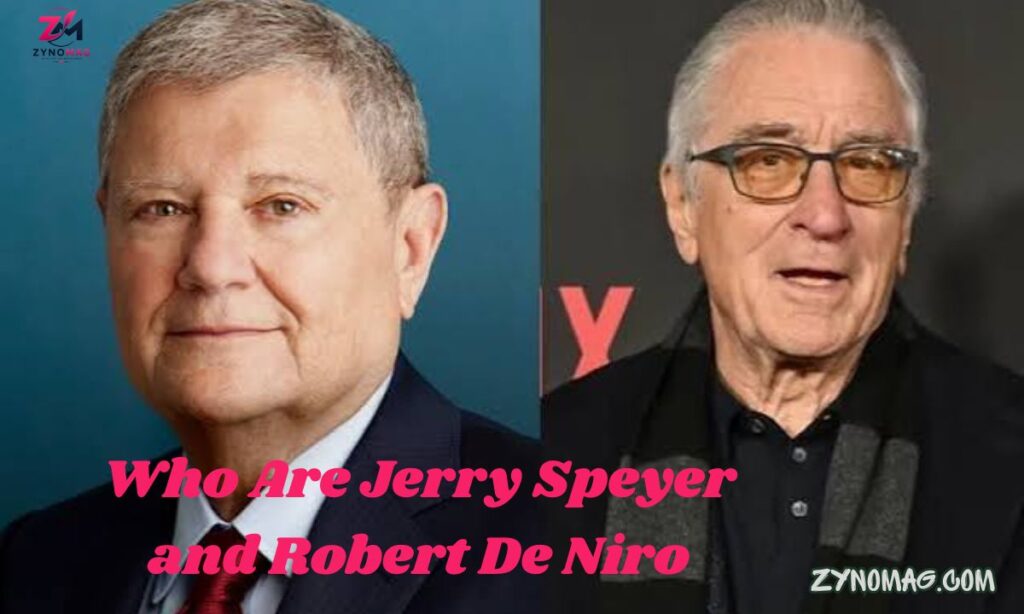
De Niro works in roles, scripts and collaboration. His success depends on preparation and instinct. A film can take months to shoot and last generations. Different paths. Similar ambition.
Early Life and Formative Years
Both men were shaped by the city before they shaped it back. Speyer arrived in New York as an infant. He grew up on the Upper West Side in a household with European roots. School led him to Horace Mann and then Columbia.
De Niro grew up in Greenwich Village and Little Italy. His mother raised him, and his father lived nearby. Both parents were painters, so art was part of daily life. These years explain a lot. One boy learned how institutions work. The other learned how artists work.
- Speyer: private schools, Columbia, business training
- De Niro: artist parents, Village streets, acting studios
- Shared: a childhood spent inside Manhattan
Jerry Speyer Shaping Skylines and Global Real Estate
Speyer’s career is about scale. Tishman Speyer operates in gateway cities across North America, Europe, Asia and Latin America. The firm has worked in places such as New York, London, Madrid, Milan and Sao Paulo. It handles development, property management and fund management.
His New York work is the most visible. The firm’s headquarters sits in Rockefeller Plaza. Its portfolio has included landmark towers and large residential deals. He also took on public service. He led the Federal Reserve Bank of New York as chairman.
That role shows how far his reputation reaches beyond property. Early in 2015, the business entered a new chapter when Rob Speyer became sole CEO. The family firm kept its founder close as chairman.
Robert De Niro Defining Excellence On Screen and Beyond
De Niro’s rise began with small roles in the late 1960s. Greetings in 1968 was an early break. His partnership with Brian De Palma started there.
The big shift came with Mean Streets in 1973. It was the first major film he made with Martin Scorsese. Crew members recalled how focused and serious he was, even during improvised scenes.
Then came The Godfather Part II, which won him his first Oscar. Later classics include Taxi Driver, Raging Bull, The Deer Hunter and Heat. Younger audiences also know him from the Meet the Parents films. Beyond acting, he produces and directs. He also helped create a major festival.
Vision Ambition and Mastery of Craft
Both men show a rare mix of vision and discipline. Speyer sees what a block could become. He then lines up partners, money and approvals. That takes patience. It also takes trust built over many years.
De Niro sees what a character could become. He then studies the role until it feels real. His long list of film classics suggests how seriously he treats the work.
The habits are similar even if the tools are not.
- Plan carefully before acting
- Respect the details
- Build long working relationships
- Stay committed over decades
Building Enduring Legacies Across Decades
Legacy is the idea that ties these two careers together. Neither man built something that vanished in a season. Speyer’s work stands in steel and glass. Tishman Speyer has operated since 1978, and the next generation now runs it.
De Niro’s work lives on film. Some of his movies are in the National Film Registry. Tribeca also continues on its own, now past its 25th edition. Legacy builds slowly. It rewards people who keep showing up.
| Legacy marker | Speyer | De Niro |
| Institution | Tishman Speyer, founded 1978 | Tribeca Festival, first held 2002 |
| Succession | Rob Speyer as CEO since 2015 | Tribeca led with Jane Rosenthal and a wider team |
| Public record | Honors from civic and academic groups | Film classics and national awards |
Quiet Strength and Uncompromising Standards
Neither man is known for noise. Speyer has long been described as steady and serious. De Niro has long been known for intense focus and a private nature. That is an observation from public coverage, not a personal claim about either man’s private life.
It fits what the record shows. Speyer’s career rests on long relationships and careful deals. De Niro’s rests on deep preparation and demanding work.
High standards are the common thread. Both men chose fields where mistakes are public and costly. A weak building or a weak performance shows quickly. Strength here does not mean volume. It means consistency.
Why New York Matters to Both Men
New York is more than a backdrop for either career. It is the reason both careers took the shape they did. For Speyer, the city is the market, the client and the legacy. His firm has built its name on Manhattan property and then taken that skill abroad.
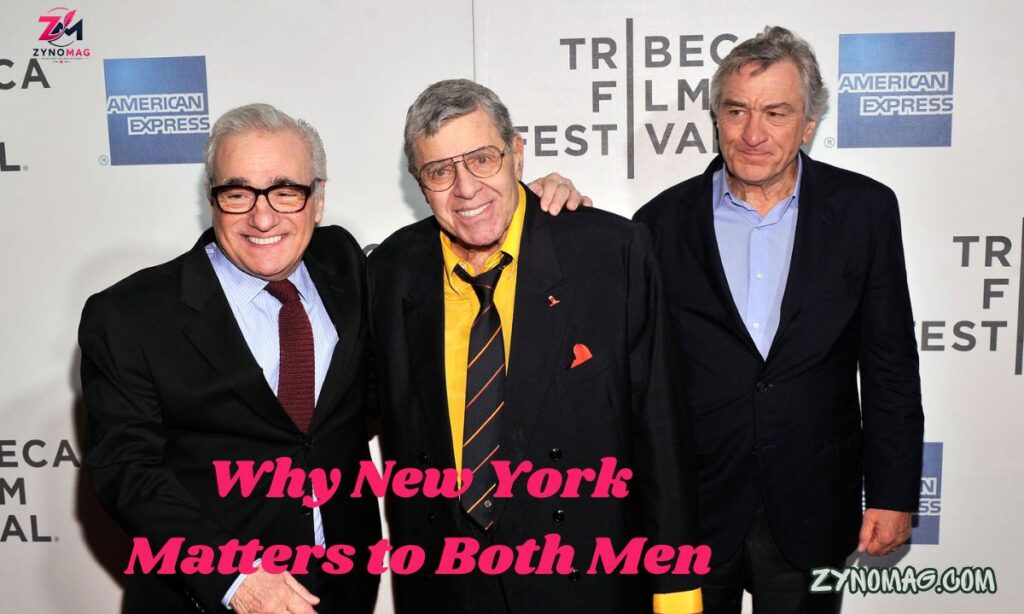
For De Niro, the city is the character in many of his best known films. Mean Streets and Taxi Driver are deeply New York stories. Tribeca then turned that bond into a real civic project.
Both men also give back through institutions. Speyer works with MoMA, Carnegie Hall and civic groups. De Niro works through the festival and downtown revival.
Robert De Niro’s Broader New York Legacy
De Niro’s New York legacy has three parts.
- Film: Many of his most famous roles are set in New York
- Place: His long ties to Greenwich Village and Tribeca
- Institution: A festival built to help a wounded neighborhood
The festival’s own history makes this clear. After 9/11, he and Rosenthal wanted to bring people back downtown. A quarter century later, the festival is still part of the city’s calendar. His 2017 induction into the Crain’s New York Hall of Fame recognized this impact beyond entertainment.
Jerry Speyer’s Broader New York Legacy
Speyer’s New York legacy also has three parts.
- Property: Tishman Speyer’s role in major Manhattan buildings
- Public service: Chairman of the Federal Reserve Bank of New York and of MoMA
- Civic leadership: Roles at Carnegie Hall, Columbia, REBNY and the Partnership for New York City
These roles show a leader who treated the city as a shared project. Crain’s added him to its New York Hall of Fame in 2020. His later years have focused on mentoring. Rob Speyer now leads day to day operations.
Jerry Speyer and Robert De Niro: Different Careers, Shared City
Their careers rarely overlap on paper. Yet the same city runs through both.
| Question | Speyer | De Niro |
| Where did the career start? | Madison Square Garden office, 1964 | Acting studios and small roles in the 1960s |
| What did they build? | A global real estate firm | A film career and a major festival |
| Where is the base? | Rockefeller Plaza, Midtown | Tribeca, Lower Manhattan |
| What kind of power? | Financial and institutional | Cultural and creative |
Midtown and Lower Manhattan are different parts of the same island. One man helped anchor the first. The other helped revive the second.
How Their Legacies Reflect New York
New York rewards people who build things that last. It also rewards people who help the city recover from hard times. Speyer’s legacy shows how long term ownership and civic service can shape a city. De Niro’s legacy shows how art and community action can heal one.
Together they show two paths to the same goal. One uses concrete and capital. The other uses film and gathering. If you want the simplest takeaway, it is this. New York is made of buildings and stories, and these two men helped make both.
Frequently Asked Questions
Are Jerry Speyer and Robert De Niro business partners?
No public record shows a business partnership between them. Their link is a shared New York identity and civic standing.
What is Jerry Speyer known for?
He is known for cofounding the real estate firm Tishman Speyer in 1978. He has also led the Federal Reserve Bank of New York and the Museum of Modern Art.
What is Robert De Niro known for?
He is known for classic films such as Taxi Driver, The Godfather Part II and Raging Bull. He is also a cofounder of the Tribeca Festival.
Why is Robert De Niro associated with Tribeca?
He lived in the neighborhood and helped found the Tribeca Festival after 9/11. The festival aimed to bring people and business back to Lower Manhattan.
What connects Jerry Speyer and Robert De Niro?
Both are major New York figures and both are Crain’s New York Hall of Fame honorees. Speyer represents real estate, while De Niro represents film and culture.
When did the Tribeca Festival start?
The first festival took place in spring 2002. Its 25th edition ran from June 3 to 14, 2026.
Who runs Tishman Speyer today?
Rob Speyer has served as CEO since 2015. Jerry Speyer stayed on as chairman.
Final Thought
Jerry Speyer and Robert De Niro prove that influence has more than one form. One leader works with land, towers and long term capital. The other works with stories, performances and community events. Neither needs the other to explain the city’s success.
Still, the pairing is useful. It shows how a city grows through both its built spaces and its shared culture. When readers search for these two names together, they are really asking how New York earns its character. The answer is in the work of people like these two.