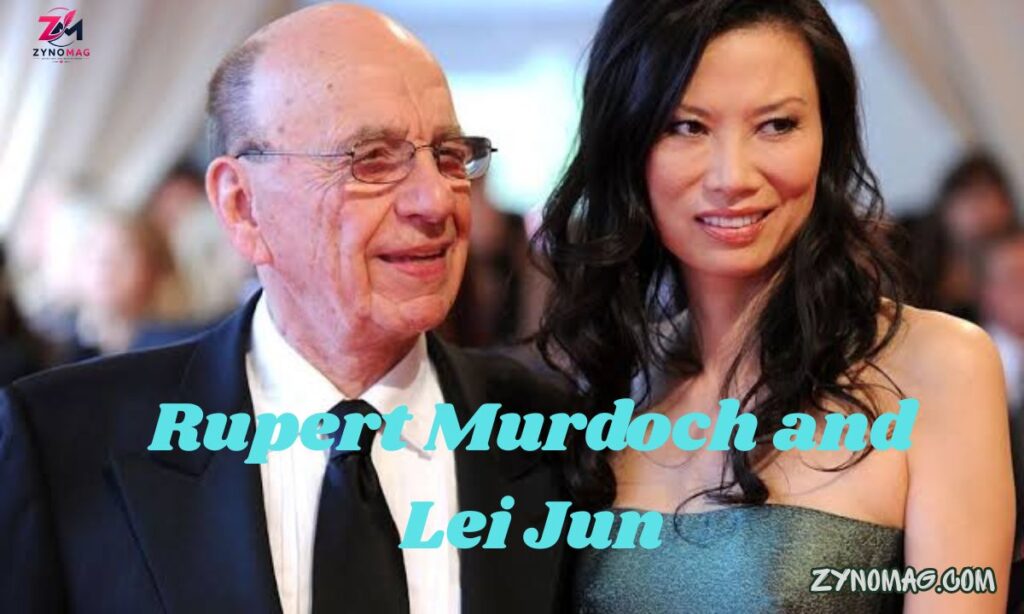

Rupert Murdoch and Lei Jun are two of the best-known business leaders of their generations. Murdoch was born on March 11, 1931, in Melbourne, Australia. He built a global media empire with News Corp and Fox Corporation.
Lei Jun was born on December 16, 1969, in Hubei, China. He founded Xiaomi, a leading technology and electric vehicle brand. This guide compares Rupert Murdoch and Lei Jun in simple terms.
You will see their backgrounds, achievements, business strategies, and leadership styles. You will also learn whether any real business link exists between them. No public evidence shows one. Read on to find out what entrepreneurs can learn from both careers.
Table of Contents
Who Is Rupert Murdoch?
Rupert Murdoch is an Australian-born American media mogul. He was born in Melbourne in 1931. His father, Keith Murdoch, was a well-known newspaper executive.
Rupert took over a small Adelaide paper in the early 1950s. He then grew it into one of the largest media groups in the world. He became a United States citizen in 1985 to meet American broadcast ownership rules.
Today he holds the title of chairman emeritus at both Fox Corporation and News Corp. His son Lachlan Murdoch leads both companies.
Rupert Murdoch’s Major Business Achievements
Murdoch’s record is long. These are the milestones people mention most often:
- Turned a single Adelaide newspaper into an international publishing group
- Bought The Sun in 1969 and later The Times and The Sunday Times
- Acquired the New York Post in the 1970s
- Built Fox Broadcasting in the 1980s as a fourth US network
- Launched Fox News in 1996
- Bought Dow Jones, publisher of The Wall Street Journal, in 2007
- Sold major entertainment assets to Disney in 2019
Who Is Lei Jun?
Lei Jun is a Chinese entrepreneur and the founder of Xiaomi. He was born in 1969 in Hubei province. He studied computer science at Wuhan University and finished early.
He is also a long-time software executive and angel investor. People often call him China’s answer to a hands-on tech founder. He still fronts Xiaomi’s major product launches.
Lei Jun’s Major Business Achievements
Lei’s record is shorter in years but fast in pace:
- Rose to lead Kingsoft, a Chinese software company, and helped take it public in Hong Kong in 2007
- Founded the online bookstore Joyo.com, later sold to Amazon
- Backed several internet start-ups as an investor
- Founded Xiaomi in 2010 and listed it in Hong Kong in 2018
- Entered the electric vehicle market with the SU7 sedan in 2024 and the YU7 SUV in 2025
Rupert Murdoch and Lei Jun: Is There a Business Connection?
No public record shows a business partnership between the two men. They do not co-own a company. They do not sit on a shared board. Searches for a joint deal return nothing credible.
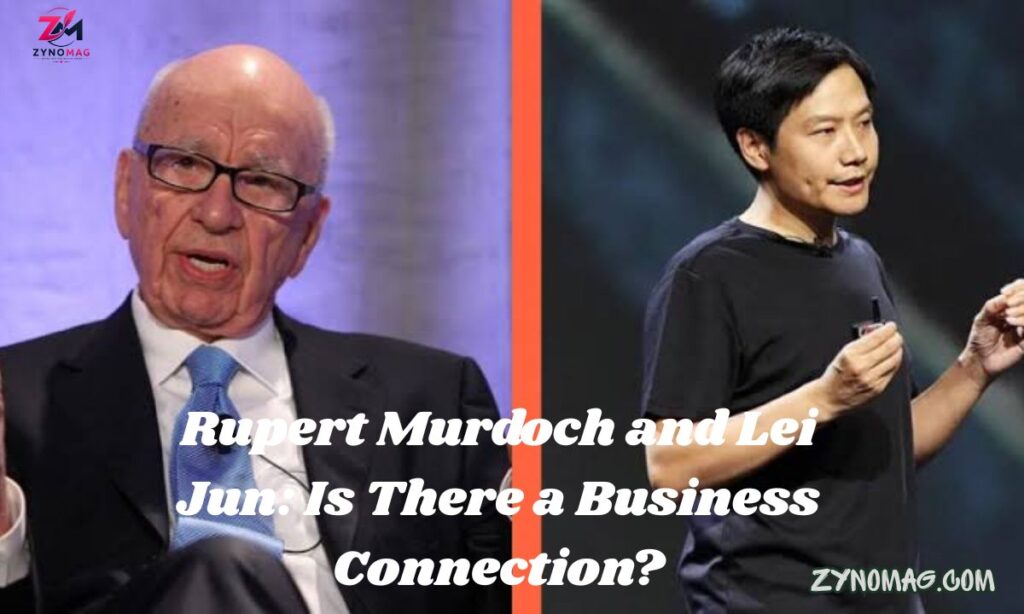
The pairing appears mostly because people search for famous business leaders together. It is a comparison topic, not a partnership story.
Their industries rarely overlap. Murdoch’s companies focus on news, television, sports, and publishing. Lei’s company focuses on phones, smart devices, and cars. Any link would be indirect, such as a news story about Xiaomi in a Murdoch-owned paper.
What Evidence Would Confirm a Connection?
A real connection would leave a paper trail. Look for these signals before believing any claim:
- A press release from Xiaomi, Fox Corporation, or News Corp
- A regulatory filing that names both parties
- A report from a major outlet such as Reuters, Bloomberg, or the Financial Times
- A joint venture, investment, or licensing agreement on record
If none of these exist, treat the claim as unverified.
Rupert Murdoch and Lei Jun: A Business Comparison
The two leaders share some traits. Both took big risks. Both expanded far beyond their first business. Both became symbols of their industries.
The differences matter more. Murdoch grew through acquisitions in mature media markets. Lei grew by launching products in fast-changing technology markets.
Murdoch’s power came from owning content and distribution. Lei’s power came from hardware, software, and a loyal fan base. One bought established assets. The other built new ones.
How Their Business Strategies Differ
Strategy is where the two careers split most clearly. Here is how each leader approached five key areas.
1. Business Expansion and Growth
Murdoch expanded by buying. He bought newspapers in Australia, Britain, and the United States. He then added television studios, networks, and satellite platforms.
Lei expanded by building and by investing. Xiaomi started with software, then moved to phones, then to smart home devices, and then to cars. His investment arm also funded many supplier and partner firms.
2. Brand Building and Customer Relationships
Murdoch’s brands spoke to audiences through content. A tabloid, a news channel, and a business paper each targeted a different reader. Loyalty came from editorial voice.
Lei’s brand grew through community. Xiaomi gathered early fans online and listened to their feedback. Strong value for money and a direct founder presence did the rest.
3. Competition and Market Positioning
Murdoch often entered markets as the challenger. Fox Broadcasting took on the three established US networks. Fox News took on older cable news channels.
Lei also played the challenger. Xiaomi started with low-priced, well-specified phones. In cars, it targets rivals such as Tesla and other Chinese electric vehicle makers.
4. Innovation and Adaptability
Murdoch adapted to new media again and again. He moved from print to broadcast, then to cable, satellite, and digital subscriptions. His companies also had to adjust as readers moved online.
Lei adapted by shifting category. Xiaomi went from software to phones to connected devices to cars. Each step used the same brand, supply chain knowledge, and software skills.
5. Leadership, Reputation, and Accountability
Murdoch’s style is bold and centralized. His papers and channels have shaped public debate, and they have also drawn heavy criticism. Legal and ethical problems have followed his companies at times.
Lei’s style is public and product focused. He appears at launches and answers customers online. Xiaomi has also faced questions about vehicle safety, which shows that accountability matters in technology as well.
Rupert Murdoch and Lei Jun at a Glance
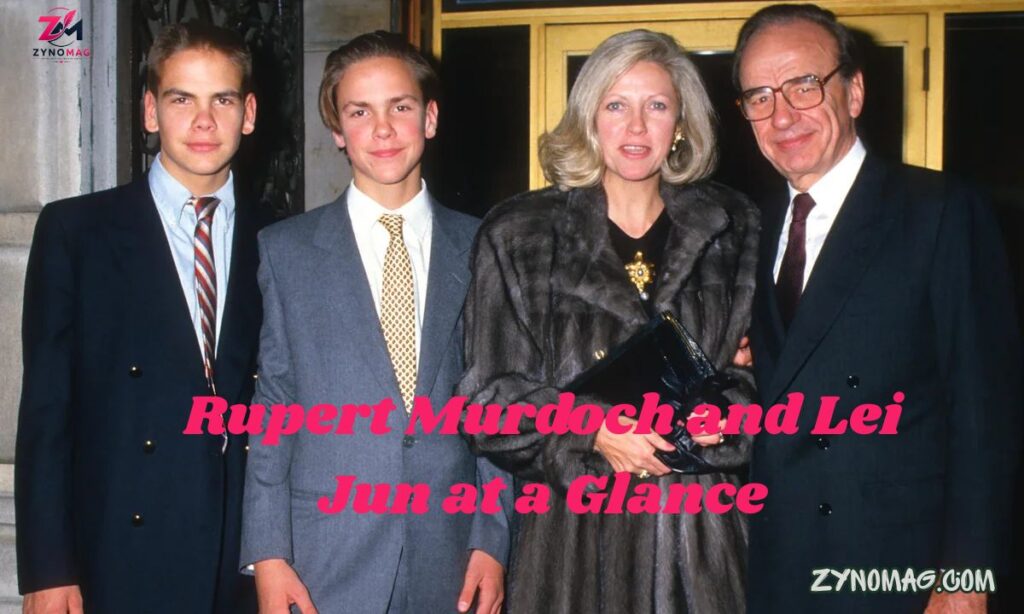
This table gives a quick view of the main facts. Figures and titles can change, so check current sources for updates.
| Category | Rupert Murdoch | Lei Jun |
| Born | 1931, Melbourne, Australia | 1969, Hubei, China |
| Education | Worcester College, Oxford | Wuhan University, computer science |
| Main industry | Media and publishing | Technology and electric vehicles |
| Best-known company | News Corp and Fox Corporation | Xiaomi |
| Growth style | Acquisitions | Product launches and investments |
| Key brands | The Sun, The Times, Fox News, The Wall Street Journal | Xiaomi phones, smart devices, SU7, YU7 |
| Current role | Chairman emeritus | Founder and chief executive of Xiaomi |
| Public image | Powerful, divisive media owner | Hands-on founder and product evangelist |
Rupert Murdoch’s Early Life and Family Background
Murdoch grew up in Melbourne in a family linked to newspapers. His father was a respected editor and later a media executive. Rupert studied at Oxford and worked briefly on a London paper.
His father died in 1952. Rupert returned to Adelaide at 21 and took charge of the family’s small newspaper. That early start shaped his taste for risk and his sense that news could be a business engine.
He has been married several times and has six children. Family relationships have been closely tied to company control, as the succession story later shows.
Building a Global Newspaper Empire
Murdoch’s first big strategy was simple. Buy struggling papers, cut costs, and sharpen the content. Then use the profits to buy more.
He entered Britain in 1969 with The Sun. He moved the paper toward a popular tabloid style, and circulation rose sharply. He later added The Times and The Sunday Times, which gave him a more prestigious title.
In the United States, he bought the New York Post in 1976. Later he purchased Dow Jones, which brought The Wall Street Journal into the group. By then, News Corp was a truly global publisher.
Television, Film, and the Fox Expansion
Murdoch saw early that television would reshape media. In the 1980s he bought a major film studio and launched a new US broadcast network. That network became Fox Broadcasting.
He also pushed into satellite television in Europe, which grew into Sky. Then in 1996 he launched Fox News, which became a leading cable news channel.
In 2019, Disney bought much of the entertainment business then known as 21st Century Fox. The remaining media assets, including Fox News and Fox Sports, became the new Fox Corporation.
Controversies, Accountability, and Murdoch’s Succession
Murdoch’s career has not been smooth. The 2011 phone hacking scandal in Britain led to the closure of the News of the World. In 2023, Fox News agreed to a settlement of about 787.5 million US dollars with Dominion Voting Systems over election related claims.
These cases show a lasting business lesson. Growth without strong oversight can damage trust and cost a great deal of money. Murdoch stepped back from day-to-day leadership in 2023.
In September 2025, a family settlement gave Lachlan Murdoch sole voting control of the new trust that holds the family’s stake in Fox and News Corp. His siblings Prudence, Elisabeth, and James left the trust. Rupert remains chairman emeritus.
Lei Jun’s Early Life and Education
Lei Jun grew up in Hubei, China. He studied computer science at Wuhan University and completed his degree in about two years. He has often said that early reading about tech start-ups inspired him.

In 1992 he joined Kingsoft, a software firm. He rose through the ranks and became one of its most important leaders. That experience gave him deep knowledge of software, users, and company building. His early years show a pattern. He learned the craft first, then built a business around it.
From Kingsoft to Joyo and Amazon
Lei’s career had a clear second act before Xiaomi. In 2000 he founded Joyo.com, an online bookstore that grew into a leading e-commerce site in China.
In 2004, Amazon bought Joyo. The company later became Amazon China. This exit gave Lei capital, e-commerce experience, and credibility with investors.
He also worked as an angel investor and backed several internet companies. Meanwhile Kingsoft listed in Hong Kong in 2007. By the time he founded Xiaomi in 2010, he had real experience in software, retail, and investing.
Electric Vehicles and Lei Jun’s Next Chapter
In 2021, Lei announced that Xiaomi would build electric cars. He pledged a 10 billion US dollar investment over ten years. Many observers doubted a phone brand could succeed in cars.
The SU7 sedan arrived in 2024. The YU7 SUV followed in 2025 and quickly became the main sales driver. Reports show that Xiaomi passed 800,000 cumulative vehicle deliveries by early September 2026. The company also set a 2026 delivery target of 550,000 vehicles.
The road has had bumps. Safety questions and delivery pressure have drawn public scrutiny. Still, the pace of growth is remarkable for a new automaker.
Comparing Leadership, Net Worth, and Influence
Both men are billionaires. Exact rankings change often with share prices. Lei was reported as China’s richest person for a time in 2025 when Xiaomi stock hit record highs. For current numbers, check Forbes or Bloomberg rather than a fixed figure.
Influence also differs. Murdoch shaped political and media debates across several countries. Lei shapes consumer technology and the future of mobility in China and beyond.
| Area | Rupert Murdoch | Lei Jun |
| Type of influence | News, opinion, and entertainment | Devices, apps, and vehicles |
| Leadership style | Centralized and family controlled | Founder led and product focused |
| Main risk | Reputation and legal exposure | Product safety and market competition |
| Succession | Settled in favor of Lachlan Murdoch | Still led by the founder |
What Entrepreneurs Can Learn From Rupert Murdoch and Lei Jun
Their stories offer practical lessons. You do not need a media empire or a car factory to use them.
Lesson 1: Understand Your Market
Murdoch knew what readers wanted from a tabloid. Lei knew what young buyers wanted from a phone. Both studied their customers first and then built products to match. Talk to real buyers before you scale. It saves money and time.
Lesson 2: Build a Strong Business Identity
Fox News, The Sun, and Xiaomi each have a clear identity. People know what they stand for within seconds. A clear identity makes marketing easier. It also builds loyalty that rivals struggle to copy.
Lesson 3: Choose the Right Growth Strategy
There are two main paths. You can buy growth, as Murdoch did. You can build growth, as Lei did. Buying is faster but needs capital. Building is slower but gives you more control. Pick the path that fits your resources.
Lesson 4: Adapt to Industry Changes
Print declined and Murdoch moved into television and digital. Phones matured and Lei moved into smart devices and cars. Watch your industry closely. When the core market slows, look for a nearby market where your strengths still apply.
Lesson 5: Protect Your Reputation
Scandals and safety concerns hurt both leaders at times. Trust takes years to earn and days to lose. Build strong compliance, honest communication, and quick response plans early.
Common Misconceptions About Rupert Murdoch and Lei Jun
Several wrong ideas spread online. Here are the most common ones:
- They are business partners. No public evidence supports this.
- Murdoch still runs Fox and News Corp. He is chairman emeritus. Lachlan Murdoch leads the companies.
- Lei Jun only sells phones. Xiaomi also makes smart home products and electric vehicles.
- Both men started from the same point. Murdoch inherited a newspaper. Lei began as an engineer and built from scratch.
- Net worth is a fixed number. It changes with share prices and currency rates.
Frequently Asked Questions
Who are Rupert Murdoch and Lei Jun?
Rupert Murdoch is an Australian-born American media mogul behind News Corp and Fox Corporation. Lei Jun is the Chinese founder of Xiaomi.
Are Rupert Murdoch and Lei Jun business partners?
No. No credible public source shows a joint company, investment, or partnership between them.
What companies are associated with Rupert Murdoch?
News Corp and Fox Corporation are the main ones. They include The Wall Street Journal, the New York Post, Fox News, and Fox Sports.
What company did Lei Jun found?
He founded Xiaomi in 2010. He also founded Joyo.com, which Amazon later bought.
What is the main difference between Rupert Murdoch and Lei Jun?
Murdoch built a media empire largely through acquisitions. Lei built a technology and car brand through product launches and investments.
Is Rupert Murdoch still chairman of Fox Corporation and News Corp?
No. He is chairman emeritus. Lachlan Murdoch leads both companies.
What can entrepreneurs learn from their careers?
Know your market, build a clear brand, adapt early, and protect your reputation.
Where can readers verify information about these business leaders?
Use company filings, press releases from Fox Corporation, News Corp, and Xiaomi, and reports from outlets such as Reuters, Bloomberg, and Forbes.
Conclusion
Rupert Murdoch and Lei Jun are not partners, but they make a useful pair to study. One built a media empire by buying and reshaping assets. The other built a tech and car brand by launching products and listening to users.
Their careers also carry a shared warning. Fast growth is powerful, but trust must keep pace. Entrepreneurs who learn from both stories can pick the right growth path, adapt early, and protect the name they build. Always check company filings and trusted news sources, because titles, deliveries, and net worth keep changing.