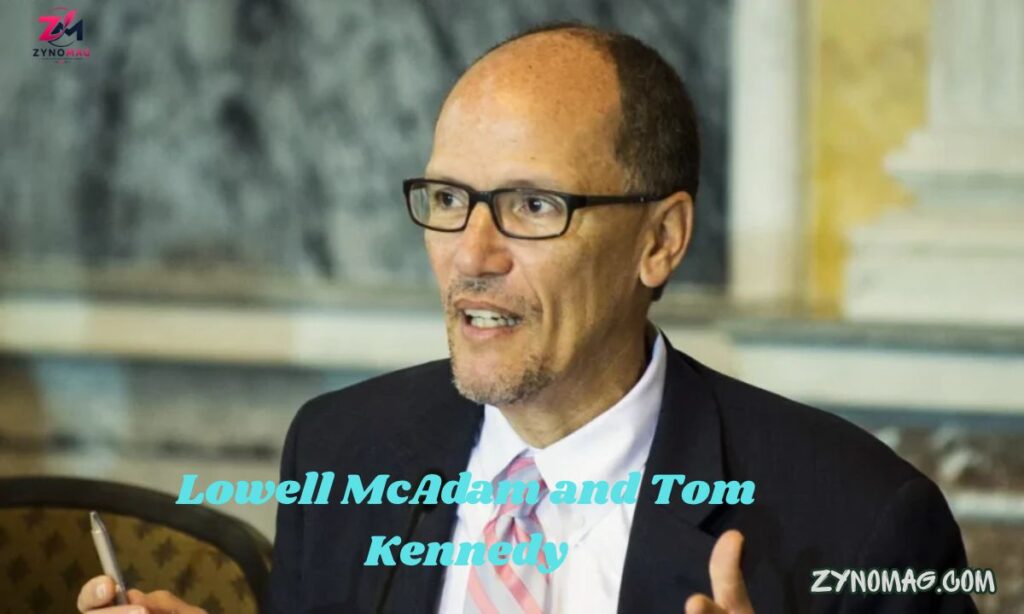

Lowell McAdam and Tom Kennedy are two American engineers who rose to lead major companies. McAdam was born on May 28, 1954, in Buffalo, New York. He became CEO of Verizon in 2011 and chairman in 2012. Kennedy was born in 1955. He joined Raytheon in 1983 as a radar engineer and became its CEO in 2014.
This guide covers their education, careers, and leadership styles. It also shows how each man shaped technology, from 5G networks to defense systems. You will also learn if they are related or connected. Read on for clear facts, simple tables, and key lessons.
Table of Contents
Lowell McAdam and Tom Kennedy Quick Bio Table
| Detail | Lowell McAdam | Tom Kennedy |
| Full name | Lowell Clayton McAdam | Thomas A. Kennedy |
| Born | May 28, 1954, Buffalo, New York | 1955 |
| Education | Engineering degree from Cornell University, MBA from the University of San Diego | Electrical engineering degree from Rutgers, master’s from the Air Force Institute of Technology, PhD from UCLA |
| Main company | Verizon Communications | Raytheon Company |
| Joined company | 2000 (Verizon Wireless) | 1983 (radar development) |
| CEO tenure | August 2011 to August 2018 | March 2014 to April 2020 |
| Chairman role | January 2012 to March 2019 | October 2014 to April 2020, then executive chairman of Raytheon Technologies |
| Industry | Telecommunications and wireless | Defense, aerospace, and cybersecurity |
| Successor | Hans Vestberg | Greg Hayes (combined company) |
Who Is Lowell McAdam?
Lowell McAdam is a retired American business leader. He served as chairman and CEO of Verizon Communications. He joined the company in 2000 and spent almost two decades there. He is best known for guiding Verizon through the shift from basic mobile service to 4G, 5G planning, and digital media.
He is also known for his engineering mindset. He often framed business problems as network problems. McAdam is a licensed professional engineer. That detail is rare among top telecom chiefs.
Lowell McAdam’s Early Life and Education
McAdam was born on May 28, 1954, in Buffalo, New York. He later studied engineering at Cornell University. Cornell gave him a strong technical base. He then earned an MBA from the University of San Diego.
The mix of engineering and business training shaped his career. It let him talk to network builders and to investors in the same meeting. He later stayed close to his alma mater. Public records list him as a Cornell trustee and, later, a trustee emeritus.
Lowell McAdam’s Early Professional Career
Before his business career, McAdam served six years in the U.S. Navy’s Civil Engineer Corps. That experience taught him planning, discipline, and project delivery.
He then moved into telecom. His early path included these steps:
- Pacific Bell, where he held several executive roles from 1983 to 1993, including marketing and customer service posts in the Bay Area
- AirTouch Communications, where he worked on international wireless ventures
- Cellular projects in Spain, Portugal, Sweden, Italy, Korea, and Japan
- PrimeCo Personal Communications, where he served as CEO
These jobs gave him global wireless experience long before he reached Verizon.
Leadership at Verizon Wireless
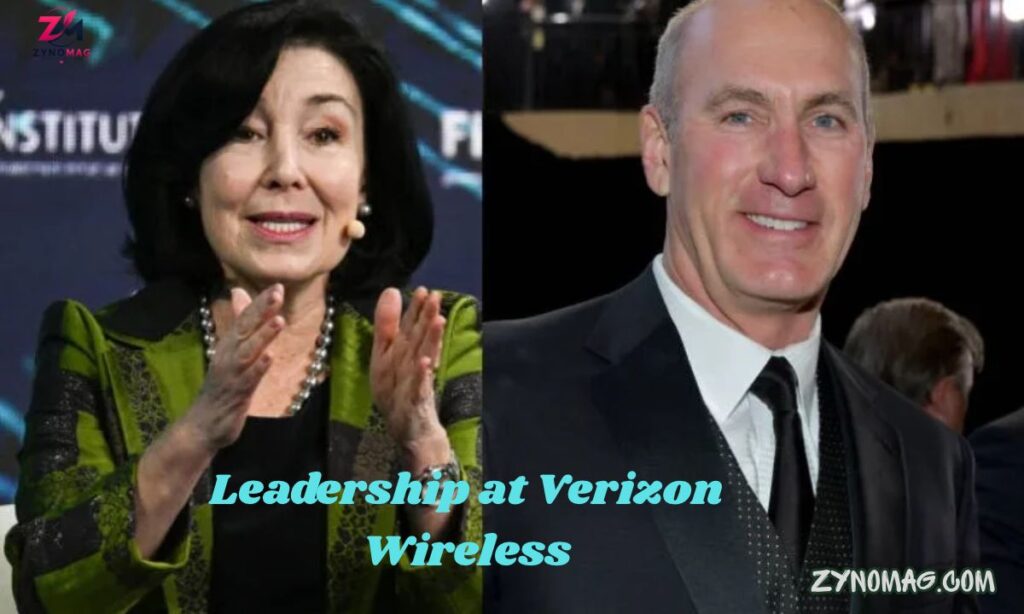
McAdam joined Verizon Wireless in 2000 as executive vice president and chief operating officer. In 2006, he became president and CEO of Verizon Wireless.
This was a growth period for mobile. Smartphones were arriving. Data use was rising fast. Network quality became the main selling point.
A few moments stand out from this era:
- In 2008, Verizon Wireless bought rival Alltel in a deal valued at more than $28 billion.
- McAdam served as chairman of CTIA, the wireless industry trade group, in 2008.
- Verizon Wireless built a reputation for reliable coverage under his watch.
This record made him the natural pick for the parent company’s top job.
Lowell McAdam as CEO and Chairman of Verizon
On October 1, 2010, McAdam became president and COO of Verizon Communications. He succeeded Ivan Seidenberg. He became CEO on August 1, 2011, and chairman on January 1, 2012.
His time at the top had a clear theme. Verizon would own more of its wireless business and expand into new digital areas.
Key decisions included:
- Completing the 2014 purchase of Vodafone’s 45 percent stake in Verizon Wireless, valued at roughly $130 billion
- Buying AOL in 2015 for about $4.4 billion
- Building a media and advertising unit that later became Oath
- Pushing early work on 5G and fiber close to homes
Some of these bets worked better than others. The wireless buyout was widely seen as a major win. The media push had mixed results.
Retirement and Professional Legacy of Lowell McAdam
Verizon announced in June 2018 that McAdam would step down as CEO on August 1, 2018. Hans Vestberg took over. McAdam stayed on as executive chairman through the end of that year. He finished his time as non executive chairman in March 2019.
His legacy rests on three points.
- He kept Verizon’s network quality at the center of its brand.
- He completed a landmark ownership deal for Verizon Wireless.
- He set the stage for the company’s 5G strategy.
After leaving, he stayed active in education and policy circles. He has served as co-chair of the CEO Council on Health and Innovation and as a director of the National Academy Foundation.
Who Is Tom Kennedy?
Tom Kennedy, whose full name is Thomas A. Kennedy, is an American engineer and executive. He served as chairman and CEO of Raytheon Company from 2014 to 2020.
He spent most of his working life at Raytheon. He started as a radar engineer and ended as the head of the company. That path is uncommon in large corporations today.
After the 2020 merger with United Technologies, he became executive chairman of the new company, Raytheon Technologies.
Tom Kennedy’s Early Life and Education
Kennedy was born in 1955. His education is deeply technical. He earned a bachelor’s degree in electrical engineering from Rutgers University.
He then completed a master’s degree at the Air Force Institute of Technology. Later he earned a doctorate in engineering from UCLA. These degrees matter in his story.
Defense technology is complex. A leader with a PhD can judge engineering claims with confidence. He later stayed involved with UCLA. He joined the engineering school’s executive board and gave a commencement address there in 2016.
Beginning His Career at Raytheon
Kennedy joined Raytheon in 1983. His first work was in radar development. Radar is the core of many defense systems, so this was a strong starting point. Early in his career, he worked as a program manager and new business leader on several radar and electronic warfare programs.
He also holds several patents tied to those technologies.This hands on start earned him respect inside the company. Engineers saw him as one of their own.
Lowell McAdam Background and Professional Development
McAdam’s growth came from moving across roles and borders. He did not stay in one lane.
Here is how his skills built up over time:
| Stage | Skill gained |
| U.S. Navy Civil Engineer Corps | Project planning and engineering discipline |
| Pacific Bell | Customer service and marketing knowledge |
| AirTouch international roles | Global operations and partnership building |
| PrimeCo and Verizon Wireless | Running a national mobile network |
| Verizon Communications | Leading a full telecom group with wired, wireless, and media units |
Outside Verizon, he also served on corporate and nonprofit boards. Public listings show him as a former independent director of General Electric. That gave him a view of how other industrial leaders run large firms.
Lowell McAdam’s Major Achievements at Verizon
McAdam’s record at Verizon is easiest to review as a short list. Each item changed how the company competed.
- Alltel acquisition (2008): Added customers and coverage to Verizon Wireless.
- Vodafone stake purchase (2014): Gave Verizon full ownership of its wireless arm.
- AOL purchase (2015): Opened a path into digital content and advertising.
- Yahoo operating business and the Oath unit: Tried to build a rival to the large online ad platforms.
- 5G and fiber strategy: Prepared the network for faster wireless service and fixed wireless at home.
In 2017, he described a plan to bring fiber near neighborhoods and then reach homes by wireless signal. He argued that this would cost less than running fiber to every house.
Tom Kennedy Background and Engineering Career
Kennedy’s career shows how engineering skill can become business skill. He moved from labs and programs to running large business units. His mid career roles included leadership of Raytheon Space and Airborne Systems and of Raytheon Systems Limited. He also led businesses tied to the Middle East and Southeast Asia.
This work grew the company’s international sales. In April 2013, he became executive vice president and COO of Raytheon. Within a year he was named CEO. The pattern is clear. He earned each promotion through delivery. He did not arrive from outside.
Tom Kennedy’s Leadership at Raytheon
Kennedy’s time as CEO began in March 2014. He had joined the board that January. He added the chairman title in October 2014. He led about 61,000 employees in 2016. Many of them were engineers working in defense, civil government, and cybersecurity.
His leadership focused on a few clear goals:
- Grow international business
- Keep a strong technology edge in radar, missiles, and electronic systems
- Expand into cybersecurity
- Support veterans and science education
In 2015, Raytheon formed Forcepoint, a joint venture built for commercial cybersecurity. Kennedy served as its chairman. The company also bought Blackbird Technologies to strengthen its work in intelligence and special operations.
Outside the company, he chaired the Aerospace Industries Association’s Board of Governors. He also served as honorary chairman of MATHCOUNTS, a math program for students.
Lowell McAdam and Tom Kennedy: Comparing Their Leadership Approaches
The two leaders came from different industries. Still, their approaches share some themes.
| Area | Lowell McAdam | Tom Kennedy |
| Core strength | Network operations and deal making | Engineering depth and program delivery |
| Growth method | Large acquisitions and full ownership of key assets | Technology development, partnerships, and a major merger |
| Customer base | Consumers and businesses | Governments and defense agencies |
| Public voice | Frequent talks on 5G, spectrum, and policy | More measured, often tied to defense and education |
| Path to the top | Telecom executive across several firms | Single company career at Raytheon |
McAdam played the role of a dealmaker with a technical eye. Kennedy played the role of an engineer who learned to run a business.
Are Lowell McAdam and Tom Kennedy Related or Professionally Connected?
No public record shows that Lowell McAdam and Tom Kennedy are related. Nothing shows a family link, a shared employer, or a joint project.
They worked in different sectors. McAdam led a telecom company. Kennedy led a defense company. Their paths crossed only in the sense that both were CEOs of large American firms at the same time.
People often search their names together for a simple reason. Both are engineers who became CEOs. Both also served in the same era of the 2010s.
One caution helps here. The name Tom Kennedy is common. A professional football player shares it. Always check the full name, Thomas A. Kennedy, and the company, Raytheon.
What Happened to Their Careers After Leaving Their CEO Positions?
Both men stayed in leadership roles for a time after stepping down as CEO. Then each moved into a quieter phase.
- McAdam remained executive chairman of Verizon through 2018. He left the chairman role in March 2019. He later focused on education, health policy, and advisory work.
- Kennedy became executive chairman of Raytheon Technologies in April 2020. He retired from that role in mid 2021.
Kennedy later joined the board of Textron, according to public insider listings. That keeps him active in the aerospace and defense world.
Important Leadership Lessons From Their Careers
Their stories offer practical lessons for managers and young engineers.
- Build technical depth first. Both men understood the products their companies sold.
- Learn the business side too. McAdam’s MBA and Kennedy’s program management roles show this.
- Be patient. Each spent decades before reaching the top job.
- Make bold moves when the timing is right. The Vodafone stake purchase and the UTC merger were large, defining deals.
- Plan the handoff. Both stayed on as chairman during a transition.
- Give back. Each supported education, from Cornell and UCLA to student math and career programs.
Tom Kennedy’s Rise to Senior Management
Kennedy’s rise followed a steady ladder. He started in radar engineering. He moved to program management. Then he took on business leadership roles across several Raytheon units.
Here is a simple view of the key steps:
| Year | Milestone |
| 1983 | Joined Raytheon in radar development |
| Mid career | Led major businesses and international units |
| April 2013 | Became executive vice president and COO |
| January 2014 | Elected to the board of directors |
| March 2014 | Became CEO |
| October 2014 | Added the chairman title |
This pace shows how steady performance can lead to the corner office.
Tom Kennedy as CEO and Chairman of Raytheon
Kennedy took over from William Swanson. At the time, defense budgets were under pressure. Raytheon needed new growth areas. He pushed the company in three ways. First, he supported exports of missile and radar systems.
Second, he invested in cyber capability. Third, he kept up a steady flow of new products. He also became the public face of Raytheon in Washington and at industry events. As chairman of the Aerospace Industries Association board, he spoke for the wider sector as well.
His six years as CEO ended with the biggest event of his career: the merger with United Technologies.
The Raytheon and United Technologies Combination
In April 2020, Raytheon Company completed its merger with United Technologies Corporation. The result was Raytheon Technologies, now known as RTX.
Greg Hayes, the UTC CEO, became CEO of the combined company. Kennedy became executive chairman. He served in that role from April 2020 until mid 2021.
The merger joined defense electronics and missiles with aircraft engines and aerospace systems. It created one of the largest aerospace and defense companies in the world. Kennedy’s role was to guide the integration and support the new leadership team.
Tom Kennedy’s Career After Raytheon
Kennedy retired as executive chairman of Raytheon Technologies in 2021. His post retirement role has been lower profile. Public listings show that he serves on the board of Textron, an aerospace and industrial company.
He also remains tied to the engineering community through UCLA’s executive board. He has also been linked with the Congressional Medal of Honor Foundation as a board member, a role that began in 2015.
Lowell McAdam and Tom Kennedy: Similarities in Their Careers
Several points link their stories.
- Both hold engineering degrees.
- Both reached the roles of CEO and chairman.
- Both led companies with tens of thousands of employees.
- Both stayed on as chairman after handing over the CEO job.
- Both guided their companies through major structural change.
- Both stayed connected to universities and education programs.
These shared traits explain why people compare them. They show that technical skill can lead to top corporate roles.
Differences Between Lowell McAdam and Tom Kennedy
The differences are just as clear.
| Factor | Lowell McAdam | Tom Kennedy |
| Career path | Moved across several telecom companies | Spent almost his whole career at one company |
| Military link | Served in the U.S. Navy before business | Worked with military customers through Raytheon |
| Education | Engineering plus MBA | Engineering with a master’s and a doctorate |
| Signature deal | Vodafone stake purchase | Merger with United Technologies |
| Market | Consumer heavy | Government heavy |
| Exit style | Planned handoff to Hans Vestberg | Handoff through a merger structure |
In short, McAdam moved between employers, while Kennedy grew inside one.
The Importance of Engineering in Corporate Leadership
Engineers think in systems. They test ideas, measure results, and fix weak points. These habits work well in large companies.
In telecom and defense, the link is even stronger. A network outage or a weapons system fault has real consequences. Leaders must grasp the technology to make good calls.
McAdam and Kennedy show three benefits of an engineering background:
- Better judgment on technical risk
- Credibility with the teams that build the product
- Comfort with long planning cycles, such as 5G rollouts and defense programs
Engineering alone is not enough. Both men added business skills along the way. That mix is what made them effective.
Their Influence on American Business and Technology
McAdam shaped how Americans use mobile service. His push for network quality and early 5G planning helped set industry standards. His deals also reshaped the wireless market.
Kennedy shaped how the United States builds and sells defense technology. His work on radar, missiles, and cyber systems supported national security. The merger he helped lead changed the aerospace landscape.
Together, they show two sides of American technology leadership. One side serves consumers. The other serves governments. Both rely on engineers who can lead.
Frequently Asked Questions
Who succeeded Lowell McAdam as Verizon CEO?
Hans Vestberg took over as Verizon CEO on August 1, 2018. McAdam stayed on as executive chairman until the end of that year.
What did Lowell McAdam study in college?
He earned an engineering degree from Cornell University. He later earned an MBA from the University of San Diego.
How long was Tom Kennedy the CEO of Raytheon?
Kennedy served as Raytheon CEO from March 2014 to April 2020. That is about six years.
What degrees does Tom Kennedy hold?
He holds an electrical engineering degree from Rutgers and a master’s from the Air Force Institute of Technology. He also has a doctorate in engineering from UCLA.
Are Lowell McAdam and Tom Kennedy related?
No public source shows any family or business link between them. They led different companies in different industries.
What happened to Raytheon after the United Technologies merger?
In April 2020, the two companies formed Raytheon Technologies, now called RTX. Greg Hayes became CEO and Kennedy became executive chairman.
What did Tom Kennedy do after leaving Raytheon Technologies?
He retired as executive chairman in 2021. Public listings show he serves on the Textron board.
Final Thoughts
Lowell McAdam and Tom Kennedy took different roads to the top. McAdam moved through the Navy, Pacific Bell, AirTouch, and Verizon. Kennedy stayed at Raytheon for almost four decades. Yet both used engineering skill as the base for their rise.
Their careers offer a clear message for readers. Learn the technology, add business skills, and be ready for big decisions. No record shows that the two men are related or worked together. Still, comparing them teaches useful lessons about leadership in American technology.