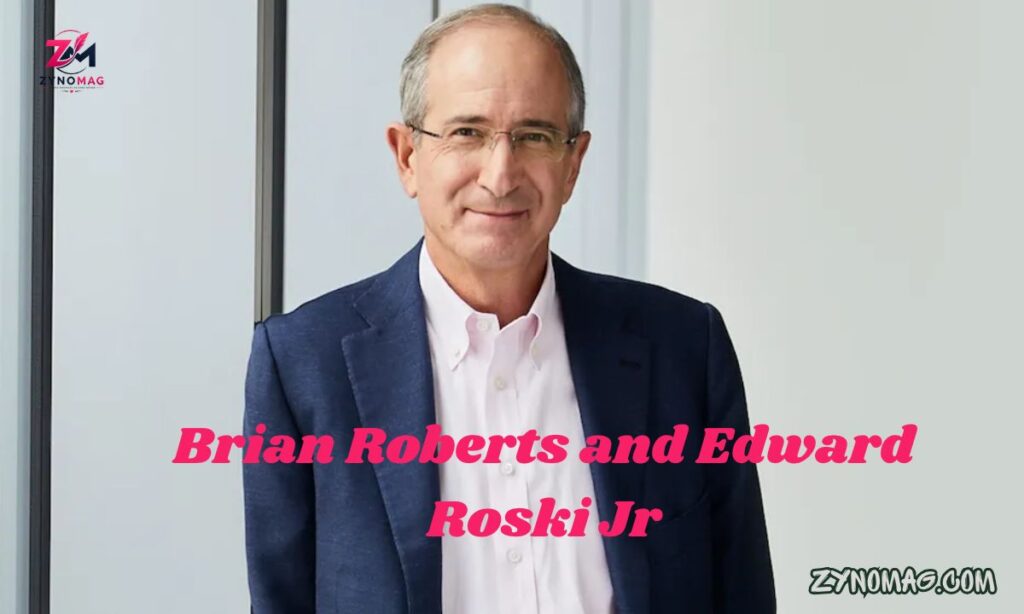

Brian Roberts and Edward Roski Jr. are two powerful American business leaders. Brian Roberts was born on June 28, 1959. He is the chairman and co-CEO of Comcast, a big media and internet company. Edward Roski Jr. was born on December 25, 1938. He is the chairman and president of Majestic Realty, a large real estate firm in California.
Both men grew up in founder families and later led the family business to new heights. Roberts built Comcast through deals like NBCUniversal and Sky. Roski built Majestic Realty and helped create the Staples Center in Los Angeles. In this guide, you will read their biographies, careers, net worth, charity work and key lessons in simple words.
Table of Contents
Who Are Brian Roberts and Edward Roski Jr.?
Brian L. Roberts is the chairman and co-CEO of Comcast Corporation. Comcast owns NBCUniversal, Sky and one of the largest broadband networks in the United States.
Edward P. Roski Jr. is the chairman and president of Majestic Realty Co. Majestic is a privately held real estate firm in California. He is also a co-owner of the Los Angeles Kings. Both men inherited a family company. Both turned it into something far bigger. Here is a quick snapshot.
| Detail | Brian Roberts | Edward Roski Jr. |
|---|---|---|
| Born | June 28, 1959 | December 25, 1938 |
| Home base | Philadelphia | Los Angeles area |
| Main company | Comcast | Majestic Realty |
| Industry | Media and telecom | Real estate and sports |
| Family link | Son of Comcast co-founder Ralph Roberts | Son of Majestic founder Ed Roski Sr. |
| Company type | Public | Private |
They rarely appear in the same sentence. Yet their stories share a pattern: a founder father, a patient son and a company that grew far beyond its first version.
Brian Roberts: Early Life and Family Roots
Brian Roberts was born on June 28, 1959, in Pennsylvania. His father, Ralph J. Roberts, co-founded Comcast in 1963 with Daniel Aaron and Julian Brodsky. The company began with a small cable system in Mississippi that served about 1,200 subscribers.
Brian grew up around that business. Cable was not a glamorous trade in those years. It was a slow, local, build-it-street-by-street business. He studied at the Wharton School of the University of Pennsylvania. He joined Comcast in 1981 as a trainee and worked his way up.
A few personal facts help round out the picture:
- He lives in Philadelphia with his wife, Aileen.
- He was an All-American in squash.
- He competed six times in the Maccabiah Games in Israel.
- He serves on the advisory board of the Tsinghua University School of Economics and Management.
It is easy to call this a story of inheritance. The record is more mixed. Roberts started at the bottom of the ladder and took on bigger roles over two decades.
Brian Roberts’ Career at Comcast
Roberts became president of Comcast in 1990. At that time the company earned about $657 million a year and served about 2.4 million customers.
He became CEO in 2002 and chairman in 2004, taking over leadership from his father step by step. Today Comcast is a Fortune 50 giant with roughly 182,000 employees and about $124 billion in annual revenue, according to recent reports.
His career has three clear phases:
- The cable builder (1980s and 1990s): Comcast grew through acquisitions and by buying systems from other operators.
- The scale builder (2000s): Big deals turned Comcast into the largest cable company in the country.
- The media owner (2010s onward): The company moved into film, television, theme parks and international pay TV.
Throughout, Roberts kept a firm grip on strategy. He also holds special voting shares that give him significant control over company decisions. That structure is a big reason he has stayed at the top for so long.
Landmark Deals: AT&T Broadband, NBCUniversal and Sky
Three deals define the Roberts era. Each one changed what Comcast was.
| Deal | Year | What it did for Comcast |
|---|---|---|
| AT&T Broadband | 2002 | Added about 13 million cable customers and made Comcast the largest US cable operator. Reported value was about $47 billion including debt. |
| NBCUniversal | 2011 and 2013 | Comcast bought 51 percent from GE in 2011 and the remaining 49 percent in 2013 for about $16.7 billion. |
| Sky | 2018 | A bidding contest with Fox and Disney ended with Comcast paying about £30 billion for the European pay TV group. |
The AT&T Broadband deal came first. It gave Comcast the national reach it needed. NBCUniversal added content to the pipes. Comcast now owned the network, the movie studio, the cable channels and the theme parks. Sky added an international base.
It brought more than 20 million customers across Europe. Not every attempt worked. A planned merger with Time Warner Cable collapsed in 2015 under regulatory pressure. Even so, the three deals above explain how Comcast moved from a cable operator to a global media group.
Brian Roberts’ Leadership Style and Recent Developments
People who cover the industry often describe Roberts as patient, hands-on and deal-minded. He tends to play the long game. He is also known for letting trusted executives run big divisions.
That approach shows in recent moves. In September 2025, Comcast named Mike Cavanagh co-CEO, effective January 2026. Roberts stayed on as chairman and co-CEO. Cavanagh joined Comcast in 2015 as chief financial officer and later became president.
Other recent developments include:
- The spin-off of Versant, a new company that holds many of NBCUniversal’s cable networks. Comcast’s 2026 proxy statement describes the spin-off as completed.
- The 2025 opening of Epic Universe, the new Universal theme park in Orlando.
- The return of the NBA to NBCUniversal.
- Continued growth of the Peacock streaming service.
Some investors have pushed back on the co-CEO structure. Comcast shares have also been under pressure in recent years. These are real debates. Anyone judging Roberts’ record should weigh both the deal wins and the stock performance.
Edward Roski Jr.: Early Life and Family Business
Edward Roski Jr. was born on December 25, 1938, in Oklahoma. His father, Ed Roski Sr., served in the Navy and moved the family to Southern California after World War II. In 1948, the elder Roski founded Majestic Realty.
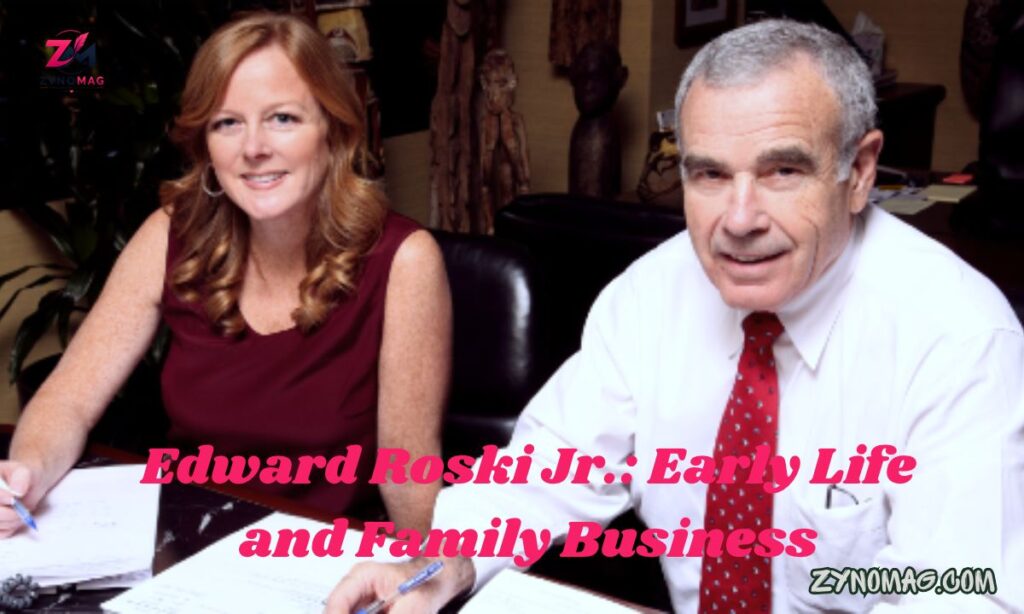
The son grew up in Los Angeles. He attended Loyola High School and then the University of Southern California. He graduated from USC in 1962 with a degree in real estate and finance.
After college, Roski did not go straight into the family firm. He served as an officer in the U.S. Marine Corps and saw combat in Vietnam. He was decorated for his service, including the Purple Heart.
Edward Roski Jr.: Biography and Career
Roski joined Majestic Realty in 1966. Over the following decades he became its president and chairman.
Majestic grew into one of the largest privately held real estate developers in the country. It is best known for industrial space such as warehouses and distribution centers. A 2017 industry list put its portfolio at about 83 million square feet of industrial, office and retail property.
His career highlights include:
- Joining Majestic in 1966 and later leading it.
- Buying into the Los Angeles Kings in 1995.
- Taking a stake in the Los Angeles Lakers in 1998.
- Co-developing the Staples Center, which opened in 1999.
- Launching the Majestic Realty Foundation in 2002.
- Becoming the first inductee in the NAIOP SoCal Hall of Fame.
Roski is also known for adventure. Profiles say he has climbed Kilimanjaro, gone down in a submersible and bought a ticket on Virgin Galactic. His business life is steady. His hobbies are not.
Brian Roberts vs. Edward Roski Jr.: Side-by-Side Comparison
The table below puts the two careers next to each other. It is a quick way to see where they overlap and where they split.
| Category | Brian Roberts | Edward Roski Jr. |
|---|---|---|
| Core business | Cable, broadband, media, theme parks | Industrial real estate, development |
| Public or private | Publicly traded company | Privately held firm |
| Founder link | Father co-founded Comcast in 1963 | Father founded Majestic in 1948 |
| Education | Wharton, University of Pennsylvania | University of Southern California |
| Military service | None reported | U.S. Marine Corps officer, Vietnam |
| Signature projects | AT&T Broadband, NBCUniversal, Sky | Staples Center, large industrial parks |
| Sports ties | NBCUniversal sports rights | Kings and Lakers ownership |
| Current role | Chairman and co-CEO | Chairman and president |
One is a public company executive who answers to shareholders. The other runs a private firm and answers mainly to his family and partners. That difference shapes how much we know about each man’s finances.
Brian Roberts and Edward Roski Jr. Net Worth
Net worth for private wealth is always an estimate. Different outlets use different methods, and numbers move with stock prices and property values.
Here is what the public record shows.
| Person | Reported estimate | Source type |
|---|---|---|
| Brian Roberts | Many sites cite figures from about $1.5 billion to $2.2 billion | Wealth websites and aggregators |
| Brian Roberts | About $780 million in disclosed share holdings (June 2026) | Market data tracker |
| Edward Roski Jr. | $8.7 billion, down from $10 billion a year earlier | Los Angeles Business Journal, 2024 |
| Edward Roski Jr. | About $8.13 billion | Bloomberg Billionaires Index profile |
Treat these as ranges, not exact totals. The Roberts figures differ widely because some sources count only disclosed Comcast shares, while others try to add private assets.
Roski’s wealth comes from real estate and sports stakes. Roberts’ wealth is tied mostly to Comcast stock. When Comcast shares fall, his paper wealth falls with them.
Philanthropy and Community Impact
Both men give back, but in different ways. Roberts’ company is known for Internet Essentials, a low-cost internet program launched in 2011. Comcast says it has helped connect millions of Americans, and it recently widened eligibility to households based on income.
The Roberts family has also supported institutions in Philadelphia, including Penn Medicine, where a proton therapy center carries the family name.
Roski works mainly through the Majestic Realty Foundation, created in 2002. It focuses on youth, family, education, health and violence prevention. Earlier profiles reported grants of more than $2 million a year.
A simple way to see the difference:
- Roberts: Corporate programs that tackle the digital divide, plus family giving in Philadelphia.
- Roski: A foundation rooted in Southern California, plus major gifts to education.
Family Legacy and Succession Planning
Family businesses live or die on succession. Both men faced it.
Roberts took the reins from his father. Now he is building a path beyond the family name. In January 2026, Mike Cavanagh became co-CEO. Reports describe him as the first leader outside the Roberts family to share the top job.
Roski leads Majestic, which is still a private family-controlled company. He has three children. Majestic does not publish succession details the way a public company must. What we know is that the firm remains privately held and has kept expanding its industrial holdings.
The contrast is useful:
- Comcast must explain succession to investors in public filings.
- Majestic can plan quietly.
- Both approaches put continuity first.
How Media and Real Estate Shaped American Cities
Media and real estate look like opposite worlds. In cities, they overlap more than you might think. Comcast built cable and internet networks that reach homes and offices across the country. It also built landmarks, including towers in Philadelphia that house its headquarters and technology teams.
Its theme parks in Orlando and Hollywood draw millions of visitors and create thousands of jobs. Majestic built the places where goods move and people gather. Industrial parks and distribution centers support online shopping and local jobs. The Staples Center helped anchor a downtown Los Angeles entertainment district.
In short:
- Roberts’ work shaped how people connect and what they watch.
- Roski’s work shaped where people work, shop and attend games.
- Both created jobs and drew investment to their home regions.
Key Lessons from Brian Roberts and Edward Roski Jr.
Their records offer practical lessons for founders, managers and investors.
- Think long term. Both men held on to core assets for decades.
- Use big deals wisely. Roberts’ major acquisitions changed his company’s size and scope.
- Respect the family firm. Each started from a father’s foundation and then expanded it.
- Build partnerships. Roski shared the Staples Center project with a partner. Roberts used joint ventures before buying outright.
- Plan for what comes next. Succession cannot wait for a crisis.
A caution is worth adding. Big deals bring big risk. Comcast’s share price has struggled in recent years, which shows that even a strong deal record does not guarantee market rewards.
Edward Roski Jr. and Sports: Staples Center and the Lakers
Sports is where Roski’s name reaches the widest audience. He bought into the Los Angeles Kings in 1995 and took a stake in the Lakers in 1998. With partner Philip Anschutz, he developed the Staples Center, a downtown arena that opened in 1999.
Construction had begun in 1998. The arena became home to the Lakers, the Kings and the Clippers. It was renamed Crypto.com Arena in 2021. During his period as a Lakers owner, the team won five NBA titles.
2000, 2001, 2002, 2009 and 2010. Roski remains identified as a co-owner of the Kings. The arena project did more than add a venue. It helped spark new hotels, restaurants and entertainment spaces nearby.
Philanthropy: USC and Education Giving
Roski’s biggest public ties are to the University of Southern California, his alma mater. His giving has focused on education, arts and health.
USC buildings and programs carry the Roski name, including the Roski School of Art and Design and the Roski Eye Institute at Keck Medicine of USC. His foundation also backs youth programs and community groups in Southern California.
Why does this focus matter? Education gifts tend to last. They support students for decades. They also tie a family name to a lasting public good.
Brian Roberts and Edward Roski Jr.: What They Have in Common
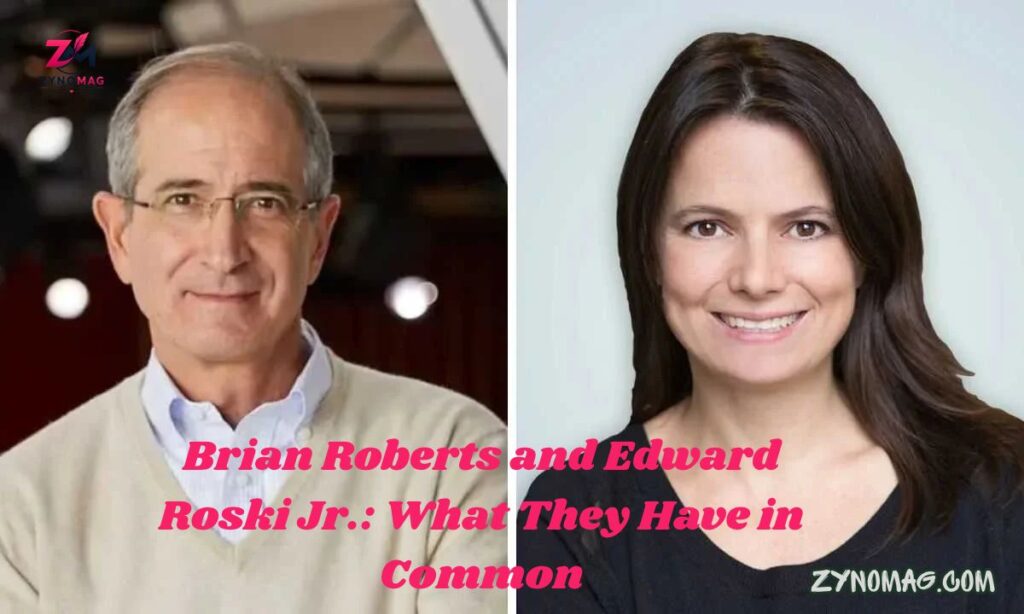
On the surface, they have little in common. Look closer and the overlap is clear.
- Both were born into founder families.
- Both stayed with the family company for decades.
- Both led major expansions beyond the original business.
- Both invested in sports and entertainment, directly or through rights deals.
- Both support education and community causes.
- Both reached the upper tier of American wealth.
They also share a style. Each is better known for building than for public speeches. Their strongest statements are made through deals, towers and arenas.
Key Differences Between Brian Roberts and Edward Roski Jr.
The contrasts are just as telling.
| Area | Brian Roberts | Edward Roski Jr. |
|---|---|---|
| Business model | Subscriptions, advertising, content | Leasing, development, property sales |
| Ownership | Public shareholders plus special voting shares | Private family control |
| Transparency | Detailed public filings | Limited public disclosure |
| Sports role | Media rights and broadcasting | Team ownership and arena building |
| Career path | Straight into Comcast after Wharton | Marine Corps first, then Majestic |
| Wealth driver | Comcast stock | Real estate and team stakes |
Roberts manages a global brand under constant market scrutiny. Roski manages a private portfolio that moves more quietly. Neither path is better. They simply fit different industries.
Net Worth and Public Standing
Wealth lists place Roski well ahead of Roberts on paper. Roski’s reported figure is in the high single digit billions. Roberts’ estimates run from several hundred million to a couple of billion, depending on the source.
Public standing tells a different story. Roberts is a household name in business media. He leads a company that people interact with daily. Roski is more visible in Los Angeles and in sports circles.
Two points help explain the gap:
- Public company executives have their holdings tracked closely. Private owners do not.
- Real estate and team values can rise sharply, which lifts private wealth lists.
If you cite either figure, always give the year and the source. Numbers change fast.
Lessons from Brian Roberts and Edward Roski Jr.
What can readers take from both biographies? First, patience pays. Neither man built his position overnight. Roberts spent more than two decades moving from trainee to CEO. Roski spent decades building Majestic after his military service.
Second, scale takes courage. Roberts made big bets on cable systems, studios and European TV. Roski bet on arenas and giant industrial parks. Third, legacy is more than money. Both men have tied their names to schools, hospitals, programs and public spaces. That is the part of their stories likely to last the longest.
Frequently Asked Questions
Who is Brian Roberts?
Brian Roberts is the chairman and co-CEO of Comcast. He joined the company in 1981 and became CEO in 2002.
Who is Edward Roski Jr.?
Edward Roski Jr. is the chairman and president of Majestic Realty. He also helped develop the Staples Center and co-owns the Los Angeles Kings.
How much is Edward Roski Jr. worth?
The Los Angeles Business Journal listed him at $8.7 billion in 2024. Other lists show similar figures.
How much is Brian Roberts worth?
Estimates vary widely, from several hundred million dollars in disclosed shares to about $2 billion on some sites. Check Forbes or Bloomberg for the latest number.
What are Brian Roberts’ biggest deals?
The AT&T Broadband deal in 2002, the NBCUniversal purchase in 2011 and 2013, and the Sky acquisition in 2018.
What did Edward Roski Jr. build?
He helped build the Staples Center and grew Majestic Realty into a major industrial real estate firm.
Are Brian Roberts and Edward Roski Jr. related?
No. They are not related. They are separate business leaders from different industries.
Final Thoughts
Brian Roberts and Edward Roski Jr. show two ways to build a lasting American business. One built a media giant that reaches homes around the world. The other built property, arenas and a sports footprint that changed Los Angeles.
Their paths differ, but the lessons overlap. Think long term, back big ideas with real capital and plan for the next generation. If you are researching either man, check the latest filings and wealth lists, because the numbers shift every year.