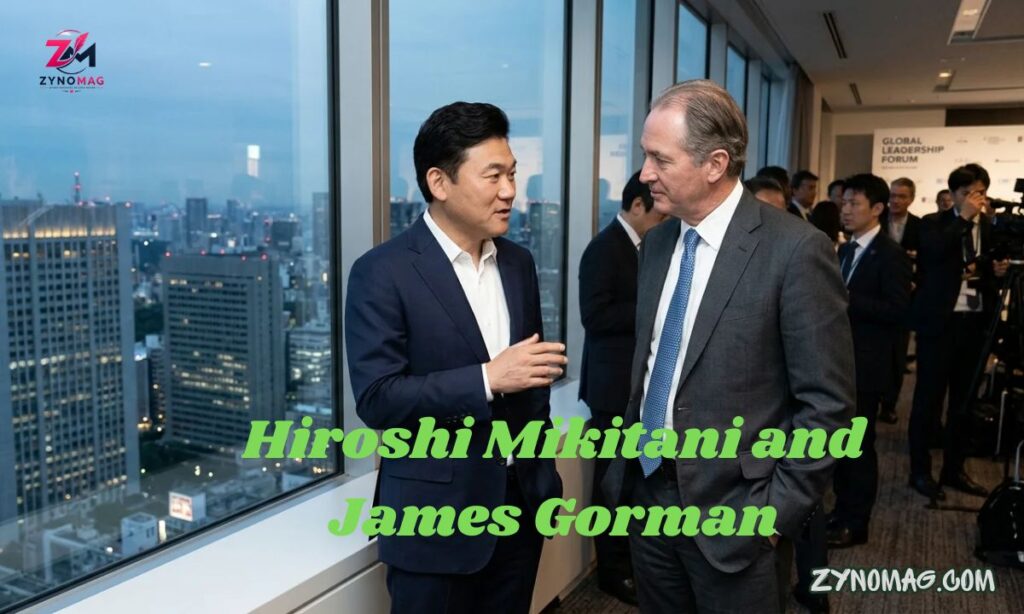

Hiroshi Mikitani and James Gorman lead very different companies. Mikitani was born on March 11, 1965, in Kobe, Japan. He founded Rakuten in 1997 and still serves as its chairman and CEO. Gorman was born on July 14, 1958, in Melbourne, Australia. He led Morgan Stanley as CEO from 2010 to 2023 and now chairs Disney’s board.
Many people search for the connection between these two leaders. No public record confirms a personal friendship. The documented link is a business one: Morgan Stanley worked as a bank on Rakuten’s bond deals between 2022 and 2024. This article explains who each man is, what connects them, and what is still unverified.
Table of Contents
James Gorman and Hiroshi Mikitani
James Gorman and Hiroshi Mikitani are two closely followed executives of their generation. Gorman is known for reshaping Morgan Stanley. Mikitani is known for growing Rakuten from a small online mall into a global ecosystem.
Their careers began on different continents. They also took different paths to the top. The table gives a fast side by side view.
| Detail | James Gorman | Hiroshi Mikitani |
|---|---|---|
| Born | 1958, Melbourne, Australia | 1965, Kobe, Japan |
| Education | Law career in Melbourne, MBA at Columbia Business School | Hitotsubashi University, MBA at Harvard Business School |
| Best known for | Leading Morgan Stanley as CEO from 2010 to 2023 | Founding Rakuten in 1997 |
| Current role | Chairman of Disney’s board | Chairman and CEO of Rakuten Group |
Both men have spent years thinking about scale, strategy, and succession. That shared theme returns throughout this article.
Who Is James Gorman?
James Patrick Gorman is an Australian American financier. He led Morgan Stanley as CEO from 2010 to 2023. He also holds the honor of Officer of the Order of Australia. Since January 2025 he has chaired the board of The Walt Disney Company. The sections below trace his path step by step.
Early Life, Education, and Professional Background
Gorman was born in Melbourne in 1958. He started his career as a lawyer there. He later earned an MBA at Columbia Business School in New York.
He then joined McKinsey & Co. and became a senior partner in its financial services practice. After that he moved to Merrill Lynch and worked in its private client business. He joined Morgan Stanley in February 2006.
- Lawyer in Melbourne
- MBA at Columbia Business School
- Senior partner at McKinsey
- Private client leadership at Merrill Lynch
- President and COO of Wealth Management at Morgan Stanley from 2006
James Gorman’s Career at Morgan Stanley
Gorman arrived to lead wealth management. He later served as joint president and co head of strategic planning. He became CEO in 2010 and chairman in 2012.
The bank had nearly collapsed in the 2008 financial crisis. Gorman steered it toward steadier, fee based businesses. Morgan Stanley said its stock price more than tripled during his tenure.
| Measure | Result reported by Morgan Stanley |
|---|---|
| Stock price | More than tripled since 2010 |
| Market value | Nearly quadrupled to $153 billion |
| Wealth and investment management share of pretax profit | About 30% in 2010, above 60% by 2023 |
These numbers come from the bank’s own statement. Read them as the company’s view of his record.
Major Acquisitions and Business Strategy Under Gorman
His plan was simple. Reduce reliance on volatile trading income. Grow stable income from wealth and asset management.
| Deal | Timing | Strategic purpose |
|---|---|---|
| Smith Barney joint venture with Citigroup | Formed in 2009, full ownership completed in 2013 | Build a large wealth management network |
| ETRADE | Announced in 2020, about $13 billion | Add a large base of retail clients and workplace plans |
| Eaton Vance | Announced in 2020, about $7 billion | Expand investment management |
Each deal pushed the firm further into fee based revenue. The bank said he reshaped it into a stronger and more balanced institution.
James Gorman’s Transition From CEO to Board Leadership
Gorman planned his exit for years. Ted Pick became CEO on January 1, 2024. Gorman stayed on as executive chairman until December 31, 2024.
The handoff drew attention for one reason. Two rival candidates, Andy Saperstein and Dan Simkowitz, chose to stay and took larger roles. That outcome is rare on Wall Street. The same succession skills later shaped his work at Disney.
James Gorman’s Role at The Walt Disney Company
Gorman joined Disney’s board in 2024. In August 2024 he took over the committee that planned the search for a new CEO. He became board chairman on January 2, 2025, succeeding Mark Parker.
The search ended in early 2026. The board voted unanimously for Josh D’Amaro, who took over as CEO on March 18, 2026. Bob Iger stays as senior adviser and director until the end of 2026.
- Chairman of the board since January 2, 2025
- Led the CEO succession committee
- Oversaw the move from Iger to D’Amaro
Who Is Hiroshi Mikitani?
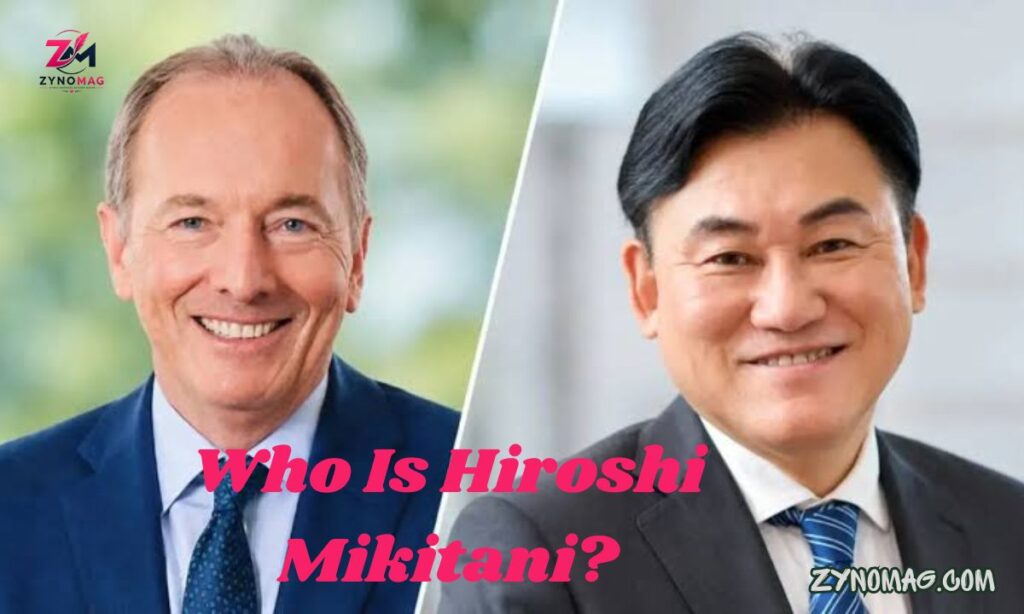
Hiroshi Mikitani, often called Mickey, is the founder, chairman, and CEO of Rakuten Group. He built the company from a startup in 1997. He is also a vocal supporter of an open internet. His story starts in banking and turns on a single event in 1995.
Early Life, Education, and Banking Career
Mikitani was born on March 11, 1965, in Kobe. He studied at Hitotsubashi University in Tokyo. In April 1988 he joined the Industrial Bank of Japan, now part of Mizuho.
He earned an MBA at Harvard Business School in 1993. The 1995 Kobe earthquake changed his plans. He left banking, started a consulting firm called Crimson Group, and soon chose to build his own business.
Founding Rakuten and Building an Online Marketplace
Rakuten Ichiba launched on May 1, 1997. The company took the name Rakuten in 1999. Mikitani started with about $200,000 of his own money.
The model helped small shops sell online. It paired merchant empowerment with omotenashi, the Japanese idea of warm, attentive service. This approach set Rakuten apart from a plain listing site.
Expanding Rakuten Beyond E-Commerce
Rakuten did not stop at shopping. It added credit cards, banking, securities, insurance, travel, and digital content. Members could earn points across the whole system.
| Area | Examples |
|---|---|
| Internet services | Rakuten Ichiba, travel, advertising |
| Fintech | Rakuten Card, Rakuten Bank, securities, insurance |
| International | Rakuten Viber, Rakuten Kobo, Rakuten Rewards |
| Mobile | Rakuten Mobile network |
The group also owns the Tohoku Rakuten Golden Eagles baseball team.
Rakuten Mobile, Fintech, and International Expansion
Rakuten became a mobile network operator in 2019. By March 2026 Rakuten Mobile had 10.36 million subscriptions. It posted its first full year EBITDA profit in 2025, at 12.9 billion yen.
Fintech is the strongest engine. The segment earned 975.9 billion yen in revenue in fiscal 2025, up 19.0%. Rakuten Bank reported 18.07 million accounts in early 2026. Internationally, Mikitani’s profile describes operations across 23 countries.
Hiroshi Mikitani’s Leadership Style and Business Philosophy
Mikitani likes bold, public moves. In 2010 he announced that English would become the company language. He withdrew from the business lobby Keidanren in 2011. He then led the rebirth of an internet industry group as JANE in 2012.
- Empower merchants and members through the internet
- Treat service quality as a core product
- Build one ecosystem instead of separate businesses
- Use AI to raise profit and speed
Harvard Business School teaches his language policy as a case study.
Mikitani’s Current Leadership Roles and Business Priorities
Mikitani is chairman and CEO of Rakuten Group. He is representative director of JANE. He also serves as executive chairman at Rakuten Bank in a non executive capacity. He has chaired the Tokyo Philharmonic Orchestra since 2011.
His business priorities are clear. Make mobile profitable. Grow the number of subscribers. Cross sell group services. Use AI to cut costs, which added 25.5 billion yen to profit in fiscal 2025.
Hiroshi Mikitani and Rakuten
Rakuten is a founder led company. Mikitani sets the direction and speaks for the brand. Few Japanese groups tie their identity so closely to one leader.
The numbers show a turnaround. Rakuten posted an operating profit of 50.4 billion yen for the first half of 2026, against a loss of 6.6 billion yen a year earlier. Japanese media called it the first January to June operating profit in seven years.
| Period | Key result |
|---|---|
| Fiscal 2025 | Net loss of 177.8 billion yen, operating profit of 14.3 billion yen |
| Q1 2026 | EBITDA of 108.8 billion yen, first quarterly mobile EBITDA profit |
| First half 2026 | Operating profit of 50.4 billion yen |
Investors still watch debt and network costs closely.
James Gorman and Disney
A board chairman does not run daily operations. Gorman leads the directors who hire, guide, and review the CEO. At Disney that job meant finding Iger’s successor.
He took the role at a hard moment. Disney faces slower broadcast television, a competitive streaming market, and fast moving AI tools. The company also plans a $60 billion investment in parks and experiences over the next decade.
- Role: Chairman of the board
- Main task completed: CEO succession
- Next test: supporting D’Amaro through his first full year
What Connects Hiroshi Mikitani and James Gorman?
The short answer is a business relationship between two companies. It is not a documented personal bond. Morgan Stanley, where Gorman was a top leader until the end of 2024, worked as a bank for Rakuten.
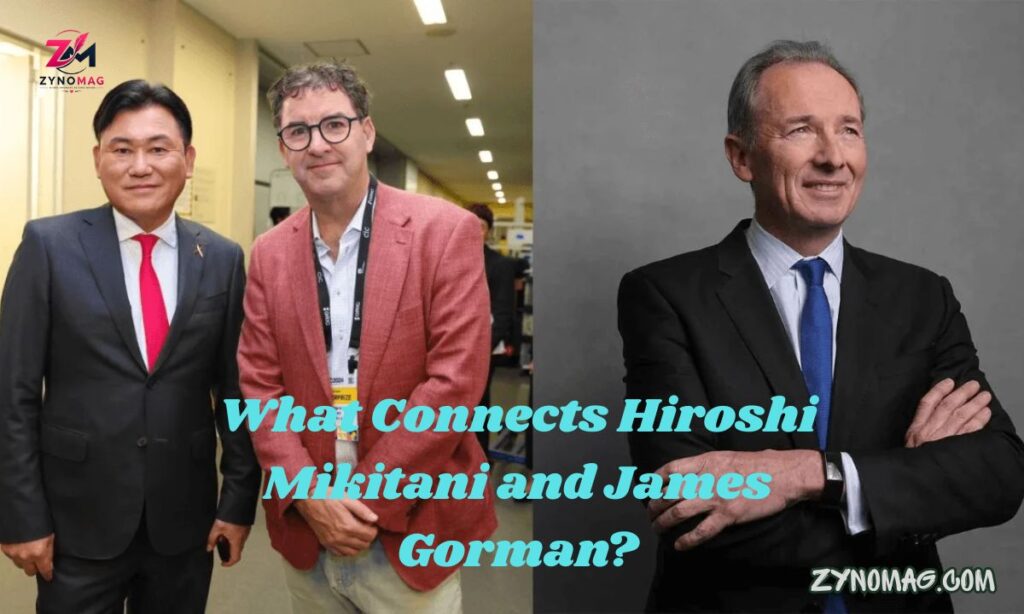
This is a normal arrangement in global finance. Large companies hire several banks for bond deals. Morgan Stanley was one of them.
- Shared field: global corporate leadership
- Shared theme: long range planning and succession
- Direct link: Morgan Stanley’s work for Rakuten
The Documented Rakuten and Morgan Stanley Connection
Law firm announcements list Morgan Stanley & Co. among the initial purchasers of several Rakuten dollar bond offerings. It also served as a dealer manager on the 2024 tender offers. Gorman was CEO through 2023 and executive chairman during 2024.
| Timing | Deal | Morgan Stanley role |
|---|---|---|
| November 2022 | $500 million 10.25% senior notes due 2024 | Initial purchaser |
| January 2023 | $450 million add on notes | Initial purchaser |
| January to February 2024 | Debt tender offers | Dealer manager |
| March 2024 | $1.8 billion senior notes | Initial purchaser |
| April 2024 | $2.0 billion senior notes | Initial purchaser |
These records show a bank and client link. They do not show that Gorman and Mikitani dealt with each other.
The 2024 Rakuten Debt Tender Offers Explained
A tender offer is a company’s offer to buy back its own bonds before they mature. Holders choose whether to sell. Rakuten launched its offers in early 2024 for two note series due in 2024.
| Item | Detail |
|---|---|
| Notes targeted | 10.25% notes and 3.546% notes, both due 2024 |
| Size at launch | Up to $1 billion, later raised |
| Early tender deadline | February 7, 2024 |
| Expiration | February 23, 2024 |
| Early tender premium | $30 per $1,000 of notes |
| Dealer managers | Goldman Sachs, Morgan Stanley & Co., Daiwa Capital Markets America, Mizuho Securities USA |
| Tendered by the early deadline | $599,407,000 and $366,444,000 across the two series |
Offers like this usually help a company manage near term debt. Rakuten also completed a new debt offering around the same time.
What Is Verified About Their Relationship, and What Is Not?
Stick to what documents prove. Online posts often hint at a secret link. None of the sources reviewed for this article support one.
| Claim | Status |
|---|---|
| Morgan Stanley served as a bank on Rakuten deals | Verified |
| Gorman led Morgan Stanley during those deals | Verified |
| Mikitani leads Rakuten | Verified |
| Personal friendship | Not confirmed |
| Joint investments or board overlap | Not confirmed |
| Private meetings or shared projects | Not confirmed |
If new filings or interviews appear, this picture could change.
James Gorman vs. Hiroshi Mikitani: Key Differences
The two leaders share ambition but little else. Their industries, ownership, and daily jobs differ. The summary table shows the gap.
| Factor | James Gorman | Hiroshi Mikitani |
|---|---|---|
| Leadership type | Hired executive | Founder |
| Industry | Financial services | Internet, fintech, mobile |
| Growth method | Large acquisitions | Building and cross selling |
| Main legacy | Wealth management pivot, orderly succession | Online ecosystem, mobile entry |
Founder-Led Entrepreneurship vs. Corporate Executive Leadership
Mikitani started with an idea and a small budget. He owns the story of Rakuten. Gorman inherited a famous institution and had to earn trust from its board and staff.
Founders move fast and take personal risk. Hired executives manage existing systems and answer to a board. Both models can work.
Technology and E-commerce vs. Financial Services
Rakuten sells goods, phone plans, and financial products through one membership. Morgan Stanley serves investors, companies, and wealthy clients. Rules, risks, and customers differ sharply.
Yet the two worlds overlap in fintech. Rakuten runs a card, a bank, and a securities arm. Morgan Stanley bought ETRADE to reach retail customers.
Business Growth, Acquisitions, and Strategic Transformation
Gorman grew through a few very large purchases. ETRADE and Eaton Vance each changed the firm’s mix of income. Mikitani grew through many smaller deals and by adding new business lines.
Both men changed their companies in a lasting way. Gorman shifted Morgan Stanley toward steady fees. Mikitani turned a shopping site into a network with its own phone service.
Their Career Achievements and Professional Legacies
Gorman’s legacy is a bank with a stronger wealth base and a calm leadership handoff. His Disney work adds another succession success in 2026.
Mikitani’s legacy is a Japanese internet company with global reach. His mobile bet carried high cost, but 2026 results suggest it is starting to pay off.
Business Lessons From James Gorman and Hiroshi Mikitani
Their careers offer practical lessons. Each one below comes from a documented decision, not from guesswork.
1. Build a Long-Term Strategy
Gorman spent years moving Morgan Stanley toward wealth management. The payoff arrived over more than a decade. Quick wins were not the goal. Mikitani kept investing in mobile through heavy losses. Patience is now showing up in profit.
2. Adapt to Changing Industries
Mikitani left banking after the 1995 earthquake and entered internet retail. Later he moved into phones. Each step followed a shift in the market. Gorman adapted a trading heavy bank to a world that prized stable income.
3. Turn Innovation Into Practical Value
Rakuten uses AI to cut costs and speed up work. The company said AI added 25.5 billion yen to profit in fiscal 2025. That is innovation tied to a number. A new tool matters only when it improves results.
4. Make Acquisitions and Investments Strategically
Gorman bought businesses that matched a clear plan. ETRADE added clients. Eaton Vance added investment products. Mikitani bought or built services that fed his membership system.
5. Build Strong Teams
Gorman kept rival executives inside the firm after the CEO choice. That protected talent and stability.
Mikitani pushed an English company language to draw a global team together.
6. Plan Leadership Succession Carefully
Gorman ran a multi year succession at Morgan Stanley. Disney then asked him to run another. The Iger to D’Amaro handoff ended years of uncertainty. Mikitani, as founder, still faces the same question for Rakuten in the long run.
7. Measure Success Beyond Revenue
Rakuten’s first half 2026 story is about profit, not just sales. Morgan Stanley’s story under Gorman was about the quality of earnings. Revenue shows size. Profit and stability show strength.
James Gorman and Hiroshi Mikitani’s Net Worth

Net worth for private individuals is an estimate. Trackers use disclosed share holdings and market prices. Numbers differ a great deal from site to site. Use the figures below as ranges, not facts.
Hiroshi Mikitani’s Estimated Net Worth and Rakuten Shareholding
Mikitani’s wealth is tied mainly to Rakuten shares. Public filings in Japan list his stake. Check the latest large shareholding report for the exact percentage, because it changes.
| Source | Estimate | Date |
|---|---|---|
| MarketScreener | About $1.87 billion | June 29, 2026 |
| Forbes figure reported by Ámbito | About $4.3 billion | November 2025 |
| Aggregator sites | Anywhere from about $3.6 billion to far higher | Various |
The wide spread shows why one number should never be treated as final.
James Gorman’s Wealth, Compensation, and Public Disclosures
Morgan Stanley paid Gorman $37 million for 2023, his last year as CEO. That was up 17.5% from $31.5 million in 2022. His base salary was $1.5 million, and the rest was bonus. Three quarters of the bonus was deferred over three years.
MarketScreener lists his net worth at about $48 million as of January 30, 2026. That figure likely understates his wealth, because it counts only disclosed holdings.
| Item | Figure |
|---|---|
| 2022 compensation | $31.5 million |
| 2023 compensation | $37 million |
| Estimated net worth, MarketScreener | About $48 million |
Recent Developments and Current Business Positions
Both leaders hold senior posts as of the latest reports reviewed. Positions can change, so confirm on company websites before you cite them.
| Person or company | Current position | Latest development |
|---|---|---|
| James Gorman | Chairman, Disney board | Helped choose Josh D’Amaro as CEO, effective March 18, 2026 |
| Hiroshi Mikitani | Chairman and CEO, Rakuten Group | First half 2026 operating profit of 50.4 billion yen |
| Rakuten Mobile | Mobile network unit | 10.36 million subscriptions in March 2026 |
| Bob Iger | Senior adviser and director, Disney | Planned retirement on December 31, 2026 |
The next year will test both men. Gorman will watch how Disney’s new CEO performs. Mikitani must prove that Rakuten’s profit can last.
Frequently Asked Questions
Are Hiroshi Mikitani and James Gorman friends?
No public source confirms a friendship. The documented link is business only, through Morgan Stanley’s work for Rakuten.
Who is James Gorman?
James Gorman is the former CEO of Morgan Stanley and the current chairman of Disney’s board. He led the bank from 2010 to 2023.
What does Hiroshi Mikitani do?
Hiroshi Mikitani is the founder, chairman, and CEO of Rakuten Group. He started the company in 1997.
How is Morgan Stanley connected to Rakuten?
Morgan Stanley served as an initial purchaser and dealer manager on Rakuten’s dollar bond deals. Those deals ran from 2022 to 2024.
What is James Gorman’s role at Disney?
He is chairman of the board. He led the search that picked Josh D’Amaro as CEO in 2026.
How much is Hiroshi Mikitani worth?
Estimates range from about $1.87 billion to about $4.3 billion, depending on the source. Exact wealth is not publicly confirmed.
Why did James Gorman leave Morgan Stanley?
He handed the CEO role to Ted Pick on January 1, 2024. He then left the executive chairman post on December 31, 2024.
Final Thoughts
The link between Hiroshi Mikitani and James Gorman is real but limited. It runs through Morgan Stanley’s role in Rakuten’s bond deals, not through a proven personal bond. That is the fact a careful reader can rely on.
Their stories still teach useful lessons. Gorman shows how to reshape an old institution and hand it off well. Mikitani shows how a founder can keep pushing a bold plan until the numbers turn. Watch Disney and Rakuten through 2026 for the next chapter.