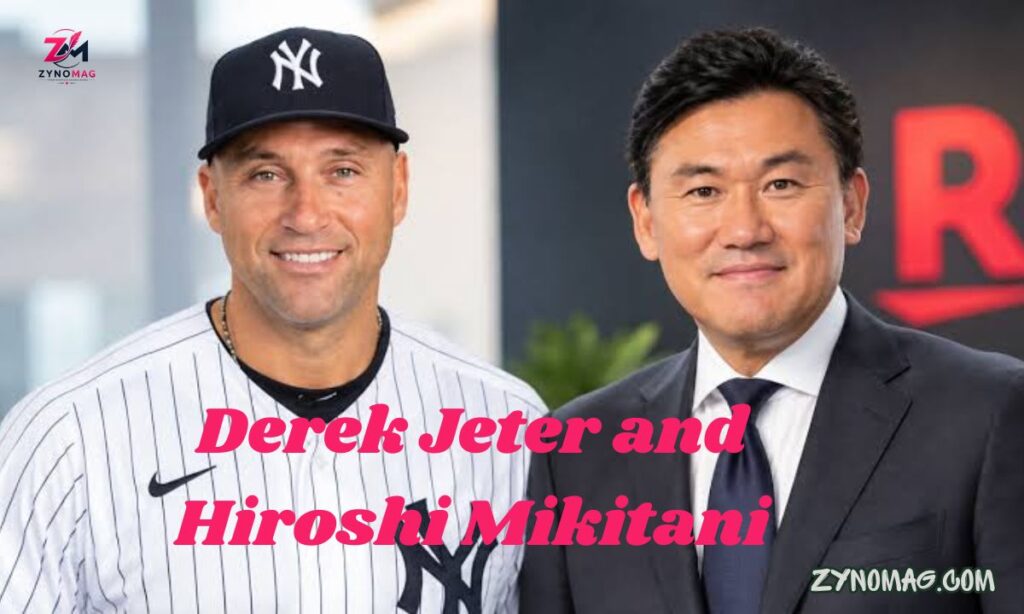

Derek Jeter was born on June 26, 1974. Hiroshi Mikitani was born on March 11, 1965. One became a Yankees legend. The other built Rakuten into a global tech brand. They seem to have nothing in common, yet their names are linked in baseball history.
The link is Masahiro Tanaka. Mikitani owned the Rakuten Golden Eagles, where Tanaka played. In 2014, Tanaka joined Jeter’s New York Yankees. This guide explains who both men are, how the connection formed, and why the 2014 transfer still matters.
Table of Contents
Derek Jeter and Hiroshi Mikitani Bio
| Detail | Derek Jeter | Hiroshi Mikitani |
| Born | June 26, 1974, Pequannock, New Jersey | March 11, 1965, Kobe, Japan |
| Best known as | Yankees shortstop and captain | Founder and CEO of Rakuten |
| Main field | Baseball, then team ownership | E-commerce, fintech, mobile, sports |
| Key team link | New York Yankees, 1995 to 2014 | Rakuten Golden Eagles, owner since the club’s start in 2004 |
| Career peak | Five World Series titles, Hall of Fame in 2020 | Rakuten’s growth into a global brand |
Who Is Derek Jeter?
Derek Jeter is a retired American shortstop. He played his entire 20 year Major League career with the New York Yankees. He debuted in 1995 and won Rookie of the Year in 1996.
He grew up in Kalamazoo, Michigan, after his early years in New Jersey. The Yankees picked him sixth overall in the 1992 draft. He became team captain in 2003 and kept the role until he retired.
His career highlights are easy to list:
- Five World Series titles (1996, 1998, 1999, 2000 and 2009)
- 14 All-Star selections
- 3,465 career hits, sixth on the all-time list
- Hall of Fame election in 2020, with 396 of 397 votes
- Number 2 retired by the Yankees in 2017
After baseball, Jeter moved into business. In 2017 he became part-owner and CEO of the Miami Marlins. He left that role in early 2022.
Who Is Hiroshi Mikitani?
Hiroshi Mikitani is a Japanese entrepreneur. He was born in Kobe and later earned an MBA at Harvard Business School. He worked in banking before he turned to the internet. He founded Rakuten in 1997.
The company started as an online shopping marketplace. It later grew into banking, credit cards, travel, telecom and more. He is also a sports owner. Mikitani won the rights to the Sendai based baseball club that became the Tohoku Rakuten Golden Eagles.
He also owns the soccer club Vissel Kobe. Reporters covering baseball in 2013 described him as one of Japan’s most successful businessmen. They also noted that he did not simply follow convention.
The Connection Between Derek Jeter and Hiroshi Mikitani
The two men never worked for the same organization. They never competed against each other. Their connection comes from one major event in baseball.
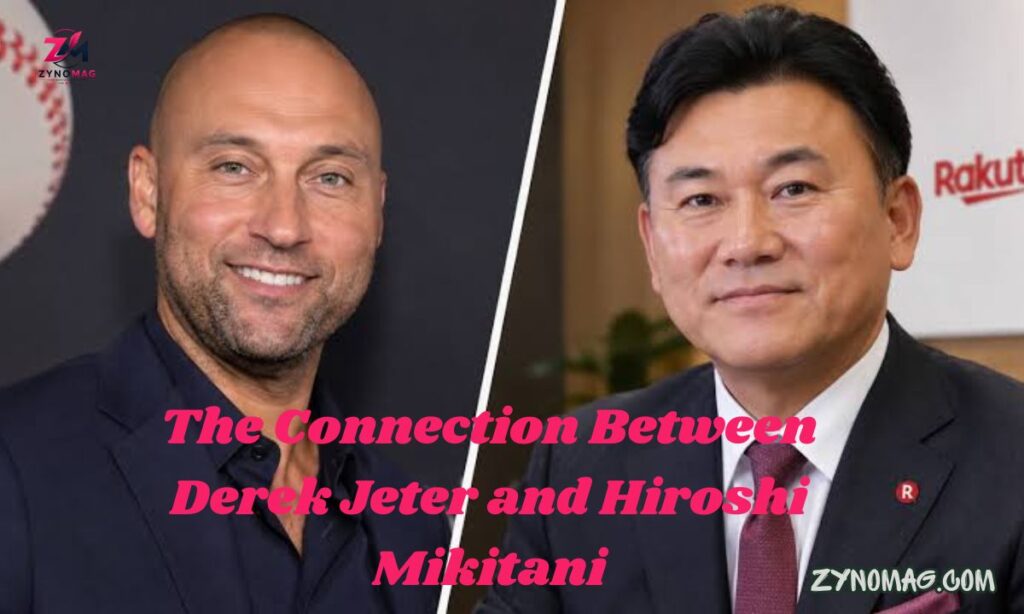
In December 2013, Tanaka was the best pitcher in Japan. Mikitani owned his team. The Yankees were chasing him, and Jeter was about to start his final season.
The timeline looks like this:
- 2013: Tanaka goes 24-0 and leads the Golden Eagles to their first Japan Series title.
- Late 2013: Mikitani first says he does not plan to post Tanaka for the majors.
- December 2013: Mikitani accepts Tanaka’s wish to test himself in Major League Baseball.
- January 2014: Tanaka signs with the Yankees.
- April 2014: Mikitani presents Tanaka with his Japan Series ring at Yankee Stadium.
- September 2014: Jeter plays his final games in pinstripes.
So one man let a star go. The other welcomed that star to his clubhouse. Both choices shaped what Tanaka became in America.
Masahiro Tanaka: The Key Figure Linking Both Men
Masahiro Tanaka was born in Itami, Hyogo Prefecture. He joined the Rakuten Golden Eagles in 2007. The team was young then and had little success. By 2013 he was unstoppable. He won 24 games without a loss. His season became one of the most famous in Japanese baseball.
That year also had emotional weight. The Golden Eagles play in the Tohoku region, which was hit hard by the 2011 earthquake and tsunami. A title in 2013 meant a lot to local fans. Tanaka then asked to try the majors. Mikitani agreed. The Yankees won the bidding with a seven year deal.
| Tanaka detail | What happened |
| Japanese team | Rakuten Golden Eagles |
| Final Japan season | 24-0 in 2013 |
| MLB team | New York Yankees |
| Contract | Seven years, $155 million |
| Fee to Rakuten | $20 million posting fee |
| Total cost to the Yankees | About $175 million |
| Yankees years | 2014 to 2020 |
His first season was strong. He earned an All-Star selection, though an elbow injury cut that year short. He stayed with the Yankees through 2020.
He returned to the Golden Eagles in 2021 and later joined the Yomiuri Giants. Jeter welcomed him publicly. During spring training in 2014, the captain said Tanaka would give the rotation a real lift.
How Are Derek Jeter and Hiroshi Mikitani Connected?
They are connected through Masahiro Tanaka. Mikitani owned Tanaka’s Japanese team. Jeter captained Tanaka’s American team.
There are two smaller links as well:
- Shared agent: Casey Close represented both Jeter and Tanaka at the time of the signing.
- Japan outreach: Jeter helped Hideki Matsui raise money for Tohoku children in 2015. That is the same region Mikitani’s club represents.
None of these links make them close partners. They are better described as two leaders on opposite sides of one historic deal. I found no reliable report of a private meeting between the two men.
Derek Jeter and Hiroshi Mikitani: Career Comparison
Their careers look different, but the scale of success is similar. Each man reached the top of his field.
| Category | Derek Jeter | Hiroshi Mikitani |
| Starting point | First round MLB draft pick in 1992 | Banker turned founder in 1997 |
| Biggest creation | A 20 year Hall of Fame career | Rakuten Group |
| Role in sport | Player, captain, later team CEO | Team owner and club builder |
| Public image | Calm, disciplined, team first | Bold, global, tech minded |
| Home market | United States | Japan, with global reach |
| Link to the 2014 deal | Welcoming teammate | Departing owner |
Jeter earned his status through performance. Mikitani earned his through building. One lived in a spotlight on the field. The other worked from the head office.
How Their Leadership Approaches Differ
Leadership is where the contrast is clearest. Jeter led by example. Mikitani led by strategy. As a captain, Jeter focused on routine and consistency. He rarely made headlines for what he said. Teammates and fans valued his steady habits and big moments in October.
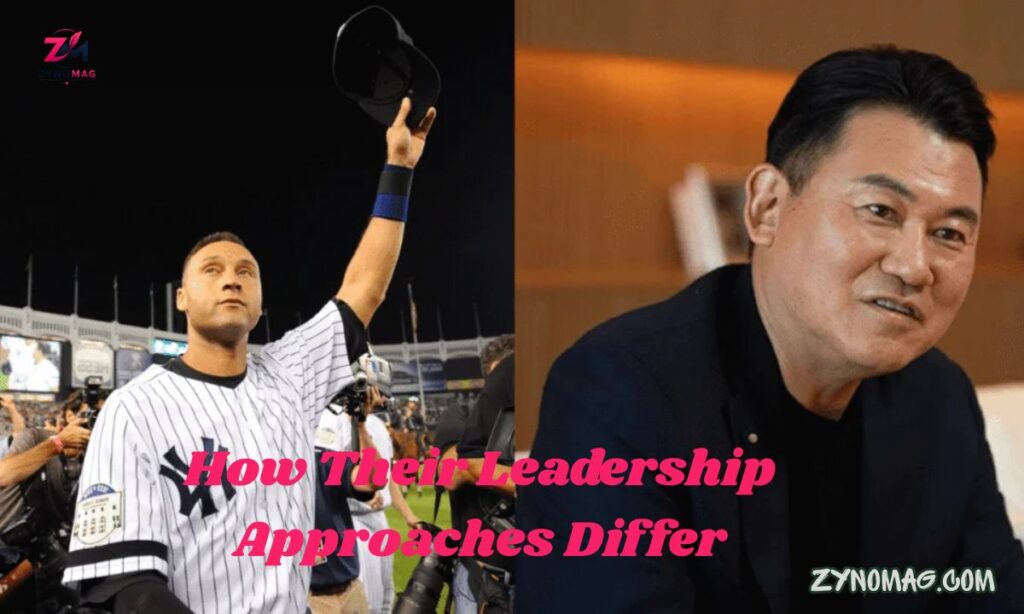
Mikitani is known for big, public moves. He pushed Rakuten into new industries and promoted English as the company language. He also treated his baseball team as a long term civic project in Sendai.
| Leadership trait | Jeter | Mikitani |
| Style | Lead by example | Lead by vision |
| Communication | Short and measured | Direct and public |
| Risk approach | Consistent daily effort | Bold business bets |
| Team focus | Winning on the field | Building a club and a brand |
The Tanaka deal shows both styles. Mikitani weighed business value, loyalty and a player’s dream. Jeter focused on how a new ace would help his team win.
Why Their Stories Matter to International Baseball
Baseball is no longer a one country sport. Stars move between Japan and the United States every year. The Tanaka move is one of the clearest examples of how that works.
Three lessons stand out:
- Owners matter. A Japanese owner can decide when a player is ready for the majors.
- Rules matter. The posting system capped fees at $20 million after a 2013 change, so teams like the Yankees could still pay big salaries.
- Culture matters. Players moving overseas need support from teammates and leaders.
Yankees fans in Japan watched the deal closely. The Yankees already had a strong following there because of Hideki Matsui. Tanaka gave that bond a new chapter.
The story also shows respect between two baseball cultures. A Japanese owner let a national hero go. An American captain welcomed him without fuss.
Comparing Their Careers and Achievements
Here is a look at what each man achieved, in simple terms.
Derek Jeter
- Won five championships with one club
- Finished with more than 3,400 hits
- Entered the Hall of Fame in his first year on the ballot
- Became a team executive in Miami
Hiroshi Mikitani
- Built Rakuten from a small online mall into a large group of companies
- Brought a new baseball franchise to Sendai
- Led that franchise to its first Japan Series title in 2013
- Expanded his sports interests into soccer
The numbers are not directly comparable. Jeter’s record is personal and athletic. Mikitani’s record is organizational and financial. Both show long term commitment to one idea.
One point links them clearly. Each man stayed with a single long project for years. For Jeter it was the Yankees. For Mikitani it was Rakuten.
Why Their Connection Matters
The connection matters because it shows how global baseball works behind the scenes. A single player move can involve owners, agents, fans and national pride. It also matters for Tanaka himself.

Without Mikitani’s decision, he would not have pitched in New York. Without a strong Yankees team and a respected captain, the move might have felt harder. For fans, the story adds depth to a well known trade. For students of business or sport, it offers a simple case study in leadership.
One leader gave up an asset. Another leader gained one. There is a human side too. Mikitani reportedly changed course after Tanaka said he wanted to test himself. That is a good example of trust between an owner and a player.
The Broader Impact of the 2014 Transfer
The 2014 transfer changed more than one roster. It influenced how teams and owners think about star players in Japan. After 2013, the posting fee was capped at $20 million. This gave Japanese teams less money but gave players more freedom. Owners had to weigh loyalty against opportunity.
The effect on Rakuten was also visible. The club kept its place in the national spotlight. It later welcomed Tanaka back in 2021, which made a strong story for fans in Tohoku.
The effect on the Yankees was mixed but real. Tanaka gave them several strong seasons and big playoff starts. He also gave New York a bigger audience in Japan.
A few results are easy to see:
- More attention on Japanese stars in the majors
- A clearer model for how owners handle posting decisions
- A lasting link between Rakuten and the Yankees in baseball history
- A stronger sense of shared baseball culture between the two countries
In short, the deal helped set the pattern for later moves by Japanese stars.
Frequently Asked Questions
These quick answers are written for voice search and featured snippets. Each one gives a direct response first.
Did Derek Jeter and Hiroshi Mikitani ever meet?
No reliable report confirms a private meeting between them. Their link comes through Masahiro Tanaka and the 2014 Yankees deal.
What connects Derek Jeter and Hiroshi Mikitani?
Masahiro Tanaka connects them. Mikitani owned his Japanese team, and Jeter captained his American team.
Did Hiroshi Mikitani own the team that Tanaka played for?
Yes. Mikitani owned the Rakuten Golden Eagles, where Tanaka played from 2007 to 2013.
How much did the Yankees pay for Masahiro Tanaka?
The Yankees agreed to a seven year, $155 million contract. They also paid a $20 million posting fee to Rakuten.
What made Derek Jeter famous?
Jeter became famous as the Yankees shortstop and captain. He won five World Series titles and collected 3,465 hits.
What is Hiroshi Mikitani best known for?
He is best known as the founder and CEO of Rakuten. He also owns the Golden Eagles baseball club.
Where did Masahiro Tanaka play after the Yankees?
Tanaka returned to the Rakuten Golden Eagles in 2021. He later joined the Yomiuri Giants.
Conclusion
Derek Jeter and Hiroshi Mikitani are not teammates, partners or rivals. They are two leaders from different industries who ended up on opposite sides of one important baseball deal. Masahiro Tanaka is the person who ties their stories together.
Mikitani let a national hero chase his dream. Jeter and the Yankees gave that hero a stage in New York. That simple exchange still explains a lot about how modern baseball connects Japan and the United States. If you want to understand the story, start with Tanaka and follow the line from Sendai to the Bronx.