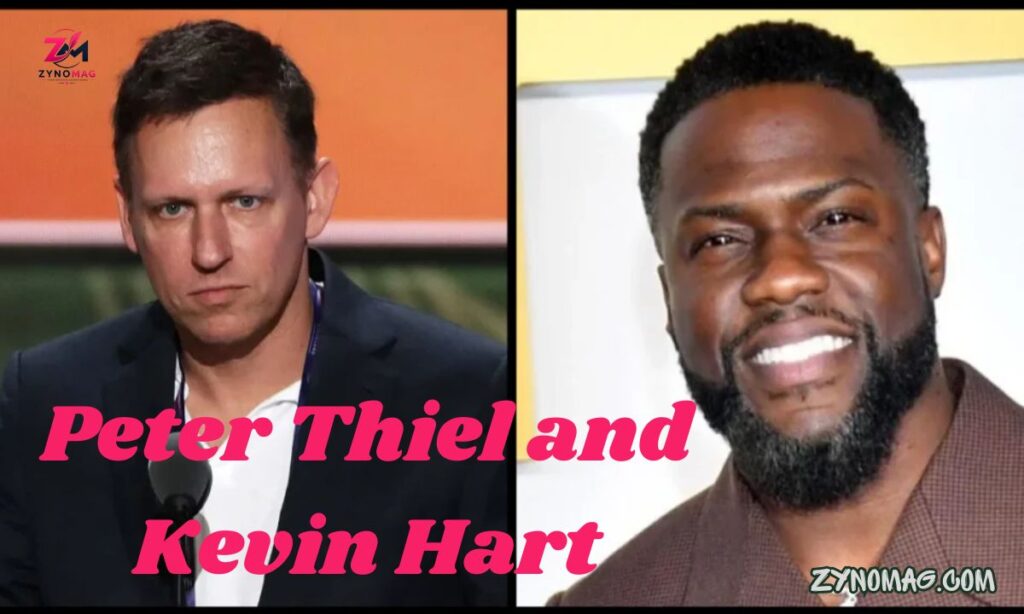

Peter Thiel and Kevin Hart came from two very different worlds. Peter Thiel was born on October 11, 1967, in Frankfurt, West Germany. He cofounded PayPal and Palantir. He also made the first outside investment in Facebook. Kevin Hart was born on July 6, 1979, in Philadelphia. He turned stand up comedy into hit films, sold out tours, and a media company called Hartbeat.
This guide compares their careers in simple words. You will see quick bio facts, business lessons, risks, and awards. You will also learn if the two men are connected. Read on to see how one man built success through technology and the other through comedy.
Table of Contents
Peter Thiel and Kevin Hart Quick Bio Table
| Detail | Peter Thiel | Kevin Hart |
| Full name | Peter Andreas Thiel | Kevin Darnell Hart |
| Born | October 11, 1967 | July 6, 1979 |
| Birthplace | Frankfurt, West Germany | Philadelphia, Pennsylvania |
| Nationality | German American, also a New Zealand citizen | American |
| Education | Stanford University (BA and JD) | Career built on stage time, not a famous degree |
| Main field | Technology and venture capital | Comedy, film, and media |
| Known for | PayPal, Palantir, Facebook investment, Founders Fund | Stand up tours, Jumanji, Ride Along, Hartbeat |
| Public role | Investor, author, political donor | Comedian, actor, producer, entrepreneur |
Who Is Peter Thiel?
Peter Thiel is a German born American entrepreneur and investor. He cofounded PayPal and Palantir Technologies. He was also the first outside investor in Facebook. He is also the cofounder of Founders Fund, a venture capital firm.
The firm has backed well known companies such as SpaceX, Stripe, and Airbnb. Thiel moved to the United States as a toddler and grew up in Ohio and California. He studied philosophy and law at Stanford.
He later became one of the most talked about figures in Silicon Valley. He also wrote Zero to One in 2014, a book on building new companies. It remains popular with founders.
Peter Thiel’s Early Entrepreneurial Journey
Thiel’s early career moved from law to finance to startups. He cofounded a student newspaper at Stanford, worked as a lawyer, and then traded derivatives at a bank. He soon felt that technology offered a bigger chance.
In 1998, he cofounded Confinity with Max Levchin. The company built tools for moving money online. In 2000, it merged with X.com, a company led by Elon Musk. The merged business became PayPal.
PayPal went public in February 2002. eBay bought it later that year for about $1.5 billion. That sale gave Thiel the capital to invest in new ideas. Many PayPal staff members went on to start or fund major companies. Insiders often call this group the PayPal Mafia.
Key early milestones:
- Studied philosophy and law at Stanford
- Worked in law and trading before moving to startups
- Cofounded Confinity in 1998
- Helped build PayPal and took it public in 2002
- Sold PayPal to eBay for about $1.5 billion
Facebook Investment and Peter Thiel’s Growing Influence
In 2004, Thiel invested $500,000 in a young company called Facebook. That check bought him a stake of roughly ten percent. It is often called one of the best early bets in tech history. He joined the board and stayed there for many years.
He sold much of his stake over time as the company grew. He left the board in 2022. The deal did more than make money. It made Thiel a name that founders wanted on their side. Other investors began to study his choices.
His influence grew through people as well as money. His network of founders, engineers, and investors kept expanding across the tech world.
Palantir Technologies and Technology Innovation
Thiel cofounded Palantir in the early 2000s. The company builds software that helps governments and large firms make sense of huge amounts of data. Early support came from the venture arm of the CIA.
Palantir went public through a direct listing on the New York Stock Exchange in September 2020. Thiel remains closely tied to the company and is its chairman.
The company has grown strongly in the age of artificial intelligence. Its stock price has also moved sharply up and down. Palantir also draws debate. Critics question its work with governments and its use of personal data. Supporters say its tools help with security and complex decisions. Both views are part of the story.
Peter Thiel’s Investment Philosophy and Business Approach
Thiel is known as a contrarian. He likes ideas that most people ignore. He often asks founders what important truth few people agree with them on.
He prefers a small number of big bets over many small ones. He also favors strong founders and bold technical goals. Founders Fund has followed this style for years.
| Principle | What It Means |
| Think contrarian | Look for truths that others miss |
| Back founders | Bet on people with a clear vision |
| Aim for monopoly | Build something so good that rivals matter less |
| Take few, large bets | Focus money on the best chances |
| Think long term | Value lasting impact over quick wins |
His views are not without critics. Still, his method is easy to explain and easy to study.
Who Is Kevin Hart?
Kevin Hart is an American comedian, actor, and producer. He was born in Philadelphia and rose from small clubs to the biggest stages in comedy. He is known for fast, energetic stand up and for his film partnership with Dwayne Johnson.
He has also appeared in hit movies for both cinema and streaming. Hart is also a businessman. He runs the media company Hartbeat and has built a brand across tequila, food, and digital content. In 2024, Fortune reported that he was the highest paid comedian in the world, with earnings of $108 million.
Peter Thiel’s Journey in Technology and Entrepreneurship
Thiel’s story is easiest to follow as a timeline. Each step built on the one before it.
| Year | Milestone |
| 1998 | Cofounded Confinity, the base of PayPal |
| 2002 | PayPal went public and was sold to eBay |
| 2003 | Helped launch Palantir |
| 2004 | Made the first outside investment in Facebook |
| 2005 | Cofounded Founders Fund |
| 2011 | The Thiel Fellowship welcomed its first fellows |
| 2014 | Published Zero to One |
| 2020 | Palantir listed on the stock exchange |
| 2022 | Left the Facebook parent company board |
The pattern is clear. He starts, invests, and then backs the next wave of builders. His journey shows how one success can open doors to many more.
Peter Thiel’s Business Philosophy and Investment Strategy
The ideas in Zero to One give a clear view of how Thiel thinks about building a company. The book is short and direct. Its main message is that the best companies create something new instead of copying others.
Core ideas from his approach:
- Go from zero to one. Create something new instead of making a small improvement.
- Seek a monopoly. A company that owns its niche can earn lasting profits.
- Start small. Win one narrow market before growing into others.
- Value secrets. Look for facts about the world that most people have not noticed.
- Respect sales. Even a great product needs a way to reach customers.
Thiel also supports young talent through the Thiel Fellowship. It gives students money to build projects instead of finishing a degree. This is the practical side of his strategy. He invests in people as much as in products.
How Kevin Hart Built His Entertainment Career
Hart began at open mic nights in Philadelphia. Early shows were rough. By his own account, he was even booed off stage at the start.
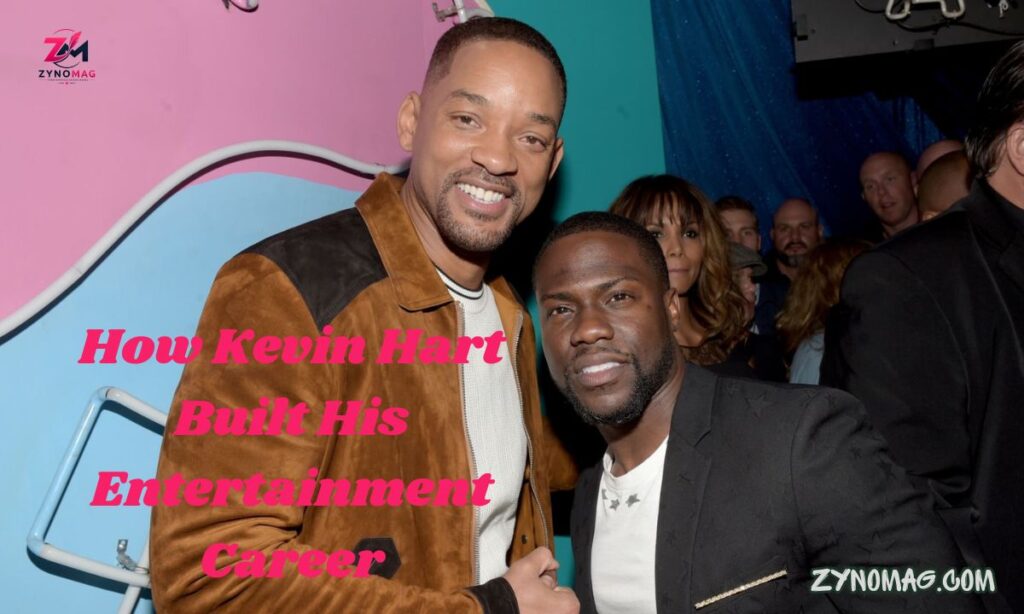
He kept going. He took small roles in television and film, including the series Undeclared and the comedy Soul Plane. Each role gave him more experience and more fans.
He also understood social media early. He used it to talk to fans directly and to promote tours. That habit helped him sell tickets long before streaming made comedy global.
His career grew in clear stages:
- Open mics and club shows
- Small TV and film roles
- Stand up albums and concert films
- Hit movies with major stars
- Business ventures and a media company
Kevin Hart’s Entrepreneurial Ventures and Hartbeat
Hart’s business life centers on Hartbeat, his global media and entertainment company. It makes films, series, podcasts, and comedy content for many platforms.
He has also built other ventures. Gran Coramino is a tequila brand he launched with Juan Domingo Beckmann. Hart House is a plant based fast food brand. He also invested in Run the World, a virtual events startup backed by a16z.
| Venture | What It Is |
| Hartbeat | Media company for film, TV, audio, and digital content |
| Laugh Out Loud | Comedy network and content brand |
| Gran Coramino | Tequila brand |
| Hart House | Plant based fast food brand |
| Run the World | Virtual events startup where he was an investor |
Hartbeat has faced a tougher period too. Reports in 2026 described layoffs and restructuring. Hart said the company had downsized but is not going away.
Peter Thiel vs. Kevin Hart: Two Different Approaches to Business Success
The two men reach success by different roads. Thiel works through companies, capital, and ideas. Hart works through his voice, his image, and his audience.
| Area | Peter Thiel | Kevin Hart |
| Starting point | Law, finance, and technology | Open mic comedy |
| Main asset | Equity in technology firms | Personal brand and stage presence |
| Business model | Invest in and build companies | Create and sell content and products |
| Risk style | Large, concentrated bets | Many projects across media |
| Audience | Founders, investors, policy circles | Fans of comedy and film |
| Public image | Private, intellectual, often debated | Open, funny, and relatable |
Neither path is better. They simply fit different strengths. One rewards deep thinking. The other rewards constant work in front of an audience.
What Entrepreneurs Can Learn From Peter Thiel and Kevin Hart
Both men offer practical lessons for anyone building a business or a career.
- Master one skill first. Thiel mastered financial technology. Hart mastered live comedy.
- Build assets you own. Thiel holds equity. Hart owns his brand and production company.
- Think beyond your first win. Both used early success to open new doors.
- Back people and partners. Thiel funds founders. Hart works with strong partners across media.
- Keep adapting. Hartbeat changed its size in 2026. Palantir changed with the rise of AI.
- Stay consistent. Both kept working for decades.
The core idea is simple. Talent opens the first door. Ownership and consistency keep you in the room.
Challenges and Risks in Their Professional Journeys
No career moves in a straight line. Both men have faced setbacks and public criticism. Thiel’s path carries business and public risks. Palantir’s government work draws debate. His political activity and his funding of a lawsuit that helped bring down the media company Gawker also raised strong reactions.
Large, concentrated bets can also lose value fast. Hart has faced his own hurdles. In 2018, he stepped away from hosting the Oscars after past social media posts resurfaced. In 2019, he was badly hurt in a car accident and had to recover.
In business, Hartbeat has dealt with leadership changes and layoffs. Running a media company is harder than performing on stage.
Common risks for both:
- Heavy dependence on a personal reputation
- Public criticism and constant media attention
- Market swings that affect business value
- The pressure to keep growing
Peter Thiel and Kevin Hart’s Influence on Their Industries
Thiel’s influence is strongest in technology and venture capital. Founders Fund helped set a style of backing bold founders. Palantir helped shape how data software is used by governments and companies. His fellowship also pushed the idea that young builders may not need a traditional degree.
Hart changed how comedians think about scale. He filled large stadiums and moved comedy into film, streaming, and business. He also created room for new comics through his media projects.
Hartbeat’s deals show his reach. The company has worked with Netflix, Fox, and Tubi on new projects. These deals focus on short form and creator driven content. Both men show that a strong personal brand can open industry doors.
Kevin Hart’s Rise in Stand-Up Comedy
Stand up is where Hart’s story began and where his fame grew. His early specials, including Seriously Funny, built a loyal base. His concert film Laugh at My Pain in 2011 brought him to a wider audience.
Let Me Explain followed in 2013 and played in theaters across the country. His 2016 tour What Now? reached a new level. It filled Lincoln Financial Field in Philadelphia, his hometown, which is a football stadium.
That show proved comedy could sell on an arena scale. Few comedians had done it so openly. His style is easy to spot. He tells fast stories about family, fear, and everyday mistakes. He laughs at himself, and fans enjoy that.
Kevin Hart’s Hollywood Career and Popular Movies
Hart moved from clubs to cinema with steady hits. His partnership with Dwayne Johnson became one of the most reliable pairings in comedy films.
| Film | Year | Why It Matters |
| Ride Along | 2014 | An early box office hit |
| Central Intelligence | 2016 | Paired him with Dwayne Johnson |
| Jumanji: Welcome to the Jungle | 2017 | Became a global hit |
| Night School | 2018 | Showed his lead actor appeal |
| Jumanji: The Next Level | 2019 | Continued the franchise |
| Fatherhood | 2021 | A more dramatic role on Netflix |
| Lift | 2024 | An action comedy for streaming |
A new Jumanji film has been announced for late 2026. Hart also returns to Netflix often, which keeps his name active on streaming.
Kevin Hart’s Business Ventures and Hartbeat
Hartbeat is the center of Hart’s content business. In 2026, its story has two sides. On one side, Hart signed a partnership with Authentic Brands Group in January 2026. The group helps manage and grow his name across new categories.
Reports say the change led to downsizing at Hartbeat. On the other side, the company keeps signing deals. It has a creator movie partnership with Tubi. It is making a Netflix comedy competition.
It has agreed to produce 25 short dramas with Fox. It also announced a slate of microseries with aTwist. The lesson is easy to see. Hart is shifting toward partnerships, licensing, and short form content. This model needs fewer people and more reach.
Awards and Recognition in Kevin Hart’s Career
Hart has earned respect from both fans and the industry. His honors show how far comedy can reach.
| Recognition | Detail |
| Mark Twain Prize for American Humor | Received in 2024 from the Kennedy Center |
| Hollywood Walk of Fame | Honored with a star |
| People’s Choice Awards | Won awards for comedy and film work |
| Top comedy earner | Named the highest paid comedian of 2024 by Fortune and Forbes reporting |
| Netflix roast | Subject of a live Netflix roast in May 2026 |
The Mark Twain Prize is among the highest honors in American comedy. It places Hart in a long line of respected performers.
Peter Thiel and Kevin Hart: Are They Connected?
There is no public record of a joint company or partnership between Peter Thiel and Kevin Hart. They work in different industries and move in different circles. They do appear in the same kind of content.
Business newsletters and podcasts often use both men as examples of strong careers and bold choices. They also share a link to the startup world. Hart has invested in startups, and Thiel is one of the most famous startup investors.
Still, their paths have not publicly crossed in business. So the connection is thematic, not personal. They are often compared because they show two ways to build influence.
Comparing Peter Thiel and Kevin Hart’s Business Careers
When you compare their careers, the biggest difference is the type of asset each man builds.
- Thiel builds equity. He owns stakes in companies and funds that grow with the market.
- Hart builds a brand. His name sells tickets, films, drinks, and content.
- Thiel works behind the scenes. Founders and investors know him more than the public does.
- Hart works in the open. Millions of fans see and hear him every year.
- Thiel bets on technology. Success depends on products and markets.
- Hart bets on audiences. Success depends on trust and attention.
Net worth figures also differ by source. Public estimates of Thiel’s wealth swing widely because of how his Palantir stake and fund returns are valued. Treat any single number with care. The key point is the same for both. Each man owns something that grows when the audience or the market grows.
Public Influence and Their Different Professional Legacies
Thiel’s legacy may be tied to ideas and institutions. Palantir, Founders Fund, the fellowship, and his writing all point in that direction. His public influence also reaches into politics and policy debates, where opinions about him are mixed.
Hart’s legacy is more personal. He opened doors for comedians and made stand up a global business. His story of hard work and open self mockery connects with many fans.
One man shapes systems. The other shapes culture. Both leave a mark that goes beyond a single job title. Their legacies are still being written. Palantir’s next chapter and Hartbeat’s next phase will matter a lot.
What Makes Peter Thiel and Kevin Hart Interesting Public Figures?
They make good case studies because they are so different. Thiel is private, analytical, and often controversial. Hart is warm, loud, and easy to like. Yet both took risks early. Both bet on themselves when the outcome was unclear.
Both built wealth and then used it to open new projects. They also remind us that success has no single script. A founder can win through patient thinking. A performer can win through endless practice. That is why readers keep searching for both names. Their stories are useful, human, and full of lessons.
Frequently Asked Questions
Who is Peter Thiel?
Peter Thiel is a German born American entrepreneur and investor. He cofounded PayPal, Palantir, and Founders Fund.
Who is Kevin Hart?
Kevin Hart is an American comedian, actor, and producer from Philadelphia. He is known for stand up, Jumanji, and his media company Hartbeat.
Are Peter Thiel and Kevin Hart connected?
No public business link exists between them. They are usually compared because both built large careers in different fields.
What companies did Peter Thiel start?
He cofounded Confinity, which became PayPal, and Palantir Technologies. He also cofounded the venture firm Founders Fund.
What is Hartbeat?
Hartbeat is Kevin Hart’s media and entertainment company. It produces films, series, podcasts, and comedy content.
How did Peter Thiel make his money?
He earned most of his wealth from PayPal, an early Facebook investment, Palantir shares, and venture capital through Founders Fund.
What can entrepreneurs learn from Peter Thiel and Kevin Hart?
Master one skill, build assets you own, and keep adapting. Thiel shows the value of bold ideas, and Hart shows the value of consistency.
Final Thoughts
Peter Thiel and Kevin Hart prove that success can take many forms. Thiel built wealth through technology, investing, and sharp ideas. Hart built it through comedy, film, and a strong personal brand. Their routes differ, but both rely on skill, timing, and nerve.
For readers, the takeaway is practical. Learn a skill deeply. Own part of what you build. Stay ready to change when markets and audiences change. Both men have faced criticism and setbacks, and both kept moving forward.