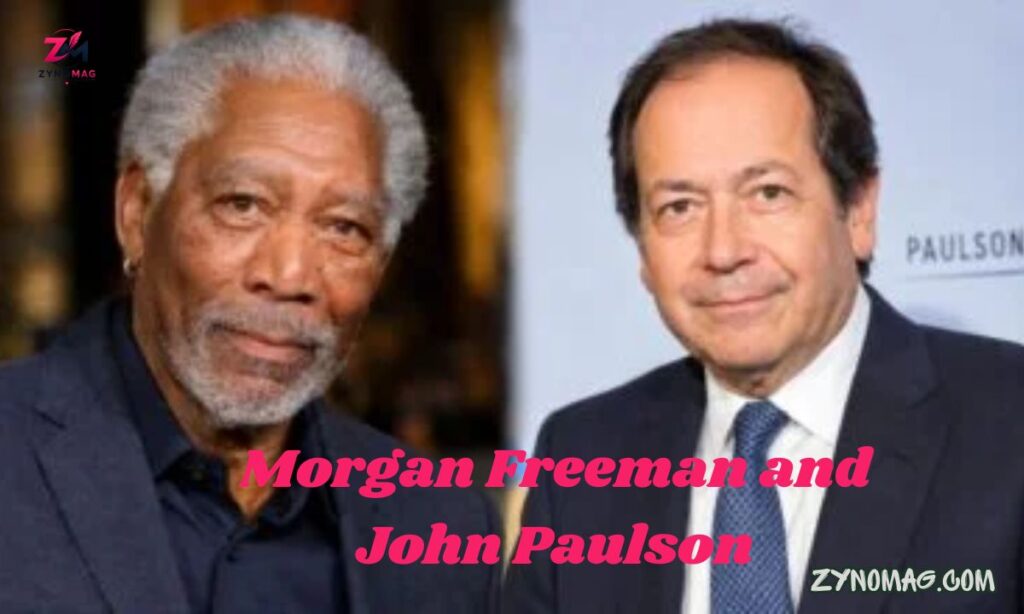

Morgan Freeman and John Paulson are two famous names from very different worlds. Freeman was born on June 1, 1937, in Memphis, Tennessee. He is an Oscar winning actor and narrator with one of the most recognized voices in film.
Paulson was born on December 14, 1955, in Queens, New York. He is a billionaire hedge fund manager who founded Paulson & Co. People often search for these two together. They want to know if the men are related, how their careers compare and who has more wealth.
This article answers those questions in simple words. You will see their life stories, their net worth estimates and the lessons their paths can teach. One thing is clear from the start. There is no confirmed family or business link between them.
Table of Contents
Who Are Morgan Freeman and John Paulson?
Morgan Freeman is an American actor, director and narrator. He is known for a calm, deep voice and a long list of film roles. John Paulson is an American billionaire investor who founded the New York firm Paulson & Co. in 1994. They work in different industries. One entertains audiences. The other manages money.
Here is a quick side by side view.
| Detail | Morgan Freeman | John Paulson |
|---|---|---|
| Born | June 1, 1937, Memphis, Tennessee | December 14, 1955, Queens, New York |
| Profession | Actor, narrator, producer | Hedge fund manager, investor |
| Main company | Revelations Entertainment | Paulson & Co. |
| Best known for | The Shawshank Redemption, Driving Miss Daisy, documentary narration | Profiting from the 2007 subprime mortgage collapse |
| Education | Began acting in school plays in Mississippi | New York University (BA), Harvard (MBA) |
| Estimated net worth | About $250 million | Roughly $3 billion to $4.5 billion, depending on the source |
Morgan Freeman and John Paulson: Is There a Confirmed Connection?
No. I found no credible report of a family tie, a business partnership or a joint project between the two men. The pairing seems to come from search behavior. People often look up famous names together when they compare wealth, success or influence.
The two names may also appear in the same lists of well known figures. It helps to be careful here. Some websites repeat guesses without proof. A claim of a connection needs a reliable source, such as a major news outlet, an official biography or a company announcement.
None of those link the two. So the honest answer is simple. They are two separate public figures. Any connection people imagine is not confirmed.
Morgan Freeman’s Journey From Early Life to Hollywood Recognition
Freeman was born in Memphis, Tennessee, and grew up in several places. He lived in Mississippi and Indiana before settling for a time in Chicago. His father was a barber, and his mother was a teacher.
He began acting in school plays in Mississippi. After high school, he served in the U.S. Air Force from 1955 to 1959. Then he turned toward acting full time.
The early years were not glamorous. His film debut was a small, uncredited part in The Pawnbroker in 1964. For years he worked on stage and in television. Many viewers first knew him as Easy Reader on the children’s series The Electric Company.
The big shift came in 1989. He appeared in Glory, Lean on Me and Driving Miss Daisy in the same year. After that, major roles kept coming.
Here are some career markers:
- Street Smart (1987), an early breakout performance
- Unforgiven (1992), a widely praised western
- The Shawshank Redemption (1994), now a classic
- Million Dollar Baby, which earned him an Academy Award
- Invictus (2009), where he played Nelson Mandela
Freeman also built a second career as a narrator. His voice carried March of the Penguins, Through the Wormhole and The Story of God with Morgan Freeman.
John Paulson’s Rise in Investment Management
Paulson grew up in New York City. He studied at New York University and later earned an MBA at Harvard Business School. He worked in finance before launching Paulson & Co. in 1994. For years the firm was not a household name. It focused on merger arbitrage and special situations.
The approach was steady rather than flashy. Then came 2007. Paulson saw trouble in the U.S. housing market. He bet that subprime mortgage securities would lose value. When the market collapsed, his funds earned roughly $15 billion. In 2010, he personally earned about $4.9 billion.
That trade became famous. Gregory Zuckerman told the story in the book The Greatest Trade Ever. The events also appear in the film The Big Short. Success did not last in a straight line. His flagship fund fell sharply in 2011.
Comparing Their Careers and Public Influence
Freeman influences culture. Paulson influences markets and institutions. That is the simplest way to compare them. Freeman reaches millions through films, documentaries and voice work. His influence is emotional and cultural. People trust his voice, so brands and filmmakers keep asking for it.
Paulson reaches fewer people directly. His influence comes from capital. He moves money into investments, universities and political campaigns. His name appears on buildings at Harvard and New York University.
Both men also share a few traits:
- Long careers built over several decades
- Early years without fame
- A willingness to take a distinct path
- Business interests beyond their original job
Their paths differ in visibility. Freeman is recognized on the street. Paulson is better known in finance and philanthropy circles.
Who Is John Paulson?
John Alfred Paulson is an American hedge fund manager and billionaire. He was born on December 14, 1955, in Queens, New York. His mother was the daughter of Jewish immigrants from Lithuania and Romania.
He attended New York University and graduated with a business degree. Harvard Business School followed. He built experience at investment firms before starting his own company. Paulson & Co. became his main vehicle.
The firm made headlines for its subprime mortgage bet. Later it became known for large positions in gold and other assets. He is also known as a donor. His gifts to Harvard and New York University carry his name.
He lives in New York and spends time in Palm Beach, Florida. In short, Paulson is a contrarian investor. He looks for assets he believes the market has mispriced, and he is willing to bet against popular opinion.
Are Morgan Freeman and John Paulson Related?
No evidence suggests they are related. They have different surnames, different family backgrounds and different places of origin. Freeman’s family roots lie in Tennessee and Mississippi. Paulson’s family roots lie in New York, with grandparents who came from Europe.
Their published biographies do not overlap. If you saw a claim that they are cousins, in-laws or relatives, treat it with caution. Check the original source before you believe it.
Have Morgan Freeman and John Paulson Worked Together?
There is no confirmed record of a joint business deal, film project or investment between them. Freeman’s production company, Revelations Entertainment, has its own financing and partners. Paulson & Co. has focused on investments, not entertainment production.
Neither company’s public history points to a shared venture. It is still possible they have crossed paths at events. Famous people often attend the same galas. But a handshake at a dinner is not a working relationship.
Morgan Freeman and John Paulson: Career Comparison
The table below compares how each man built his career.
| Factor | Morgan Freeman | John Paulson |
|---|---|---|
| Starting point | School plays, then military service | Business studies, then finance jobs |
| Breakthrough | Driving Miss Daisy and Glory era, late 1980s | Subprime mortgage trade, 2007 |
| Age at major breakthrough | Early 50s | Early 50s |
| Core skill | Voice, presence, character work | Risk analysis, contrarian thinking |
| Business side | Revelations Entertainment, Ground Zero Blues Club | Paulson & Co., gold and real estate holdings |
| Biggest setback | Public criticism after 2018 allegations | Sharp fund losses in 2011 |
| Public profile | Very high | Moderate, mostly in finance and politics |
One detail stands out. Both men reached their biggest moments after they turned fifty. Neither was an overnight success.
What Can We Learn From Their Professional Journeys?
Patience is the clearest lesson. Freeman worked for decades before he became a household name. Paulson ran a modest firm for more than a dozen years before his famous trade.
Preparation matters too. Freeman spent years on stage and in television. That practice made him ready when film roles arrived. Paulson studied credit markets in detail. His 2007 bet was a calculated view, not a lucky guess.
There is a third lesson. Both men kept going after setbacks. Freeman’s early career had long stretches without major roles. Paulson’s funds had hard years after 2011.
When you look at both stories, three ideas repeat:
- Build skill before chasing recognition.
- Spot an opening others overlook.
- Stay in the game long enough for the opening to matter.
Morgan Freeman’s Net Worth and Sources of Income
Most public estimates place Freeman’s net worth near $250 million. Some sites list a range of $250 million to $270 million. Treat these as estimates. His actual finances are private.
His income comes from several streams. Acting fees are the largest and longest running. Narration adds steady work, and his voice has been used in documentaries and commercials. He also earns through Revelations Entertainment, which he co-founded with Lori McCreary in 1996.
The company produced Madam Secretary and other projects. Owning part of a production company lets him earn from content, not only from salary.
His other assets include:
- Ground Zero Blues Club in Clarksdale, Mississippi, which he co-founded in 2001
- Madidi, a restaurant he has been linked to in Mississippi
- A Mississippi ranch of about 124 acres, which he turned into a bee sanctuary
- Real estate in New York
Exact stakes and revenue figures are not public. Any site that claims precise numbers is guessing.
John Paulson’s Net Worth and Investment Wealth
Paulson’s net worth estimates vary more widely. Forbes put it at about $3.8 billion in August 2025. Other sources list figures from $3 billion to $4.5 billion for 2026.
The difference comes from timing and method. Hedge fund wealth moves with markets. A gold rally can add hundreds of millions in a short time. A drop can remove it just as fast.
His wealth rests on a few pillars:
- Fees and returns from Paulson & Co.
- Personal capital invested in his own funds
- Large exposure to gold and gold mining companies
- Real estate and other holdings
His peak came after the 2007 mortgage trade. His funds then managed far more money than they do today. Since then, assets and wealth have shifted with performance and investor withdrawals.
Different Approaches to Building Long-Term Success
Freeman built wealth through repeat work and ownership. He kept acting, kept narrating and then added a production company. Each stream supported the others.
Paulson built wealth through concentrated bets. He studied a theme, such as housing or gold, and committed heavily. The reward was large. So was the risk.
The two approaches suggest different strengths:
| Approach | Freeman | Paulson |
|---|---|---|
| Style | Steady, diversified | Focused, high conviction |
| Risk level | Moderate | High |
| Source of edge | Reputation and voice | Research and timing |
| Time horizon | Decades of consistent work | Long waits, then large payoffs |
Neither style is better for everyone. A steady path suits people who want stability. A concentrated path suits people who accept big swings. Most readers will land somewhere in between.
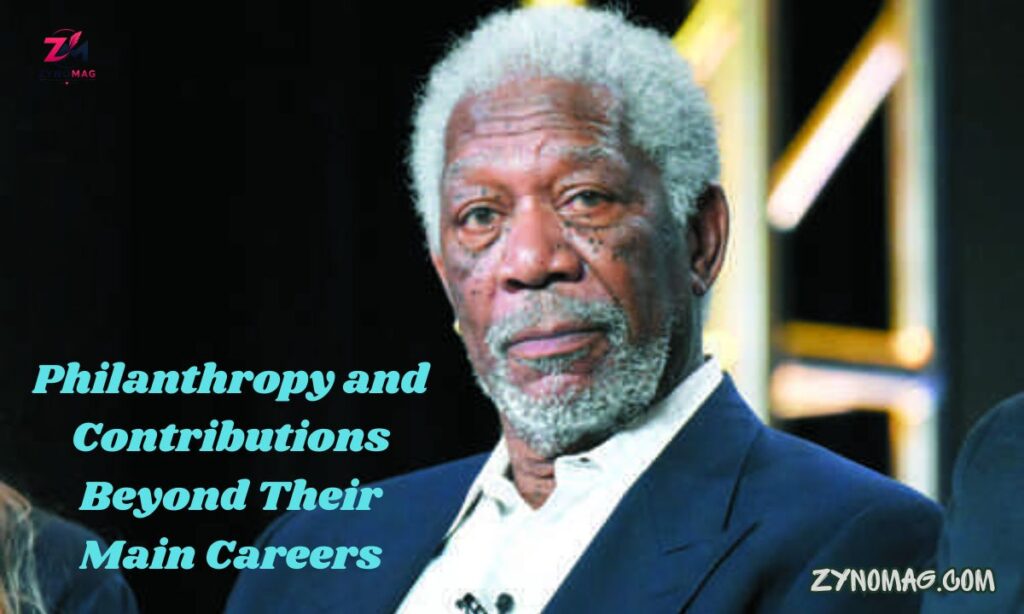
Philanthropy and Contributions Beyond Their Main Careers
Paulson is the better documented donor. In 2015, Harvard’s engineering school was renamed the Harvard John A. Paulson School of Engineering and Applied Sciences after a record gift, reported at $400 million. In 2022, New York University announced a $100 million gift for a new building, named the John A. Paulson Center.
He has also supported hospitals and education abroad. Reported gifts include money for a children’s hospital in Ecuador and a chair in European political economy at the London School of Economics.
Freeman’s giving is quieter and more local. He has put energy into Mississippi culture. The Ground Zero Blues Club helps celebrate Delta blues. His bee sanctuary supports pollinators, a cause he has spoken about publicly.
Their contributions look different:
- Paulson: large institutional gifts to universities and hospitals
- Freeman: cultural preservation, environmental projects and community presence
Both show that success can extend past a paycheck.
Public Perception, Reputation, and Media Attention
Freeman is widely admired. Audiences connect with his calm tone and dignified roles. Many people see him as a symbol of trust. His reputation has not been free of controversy. In 2018, news reports described allegations of inappropriate behavior.
Freeman apologized and said he had not meant to make anyone uncomfortable. The episode affected some business deals and public opinion. Paulson’s image is more mixed and more specific to his field. Many see him as a brilliant investor.
Lessons From Their Professional Journeys
A few practical ideas come out of both careers.
- Start where you are. Freeman began in school plays. Paulson began as an analyst. Neither waited for a perfect launch.
- Own what you create. Freeman added a production company. Ownership can turn a job into an asset.
- Do the research. Paulson’s trade rested on careful study of mortgage data.
- Diversify when you can. Freeman’s clubs, ranch and company reduced reliance on acting fees.
- Expect setbacks. Both men faced public and professional low points.
- Give back. Both have supported causes beyond their careers.
These ideas apply to students, freelancers, investors and small business owners. They do not require fame or billions.
Quotes and Ideas That Reflect Their Careers
Many quotes attached to famous names online have no reliable source. To keep this article accurate, this section focuses on documented ideas instead of unverified lines. Freeman’s work reflects an idea of quiet persistence.
His best known roles often show characters who endure hardship with patience and dignity. His documentary work, such as The Story of God, shows a curiosity about big questions. Paulson’s career reflects the idea of contrarian conviction.
He has said publicly that gold still has room to run as people lose faith in paper currencies. That belief matches his long history of betting against the crowd. If you want direct quotes, use interviews, official transcripts or published books. Those sources let you verify wording and context.
Understanding Their Broader Legacy
Freeman’s legacy is cultural. His films and narration will keep reaching new audiences. He helped make a certain kind of calm authority part of screen history. His work in Mississippi also supports a regional music tradition.
Paulson’s legacy is financial and institutional. The mortgage trade is now a case study in business schools and books. His name on university buildings will outlast market cycles.
Together they show that success has more than one shape. One person can shape how we feel. Another can shape how capital moves. Both left marks that people still discuss.
Frequently Asked Questions
Who are Morgan Freeman and John Paulson?
Morgan Freeman is an Oscar winning American actor and narrator. John Paulson is an American billionaire hedge fund manager who founded Paulson & Co.
Are Morgan Freeman and John Paulson business partners?
No. There is no confirmed business partnership between them.
What is Morgan Freeman best known for?
Freeman is best known for The Shawshank Redemption, Driving Miss Daisy and his deep narrating voice.
Why is John Paulson famous?
Paulson became famous for betting against subprime mortgages in 2007, a trade that earned his funds about $15 billion.
Who is wealthier, Morgan Freeman or John Paulson?
Paulson. Estimates place him in the billions, while Freeman is usually estimated near $250 million.
Do Morgan Freeman and John Paulson work in the same industry?
No. Freeman works in entertainment, and Paulson works in investment management.
What can people learn from Morgan Freeman and John Paulson?
Both men show the value of patience, preparation and persistence over many years.
Conclusion
Morgan Freeman and John Paulson have no confirmed family tie or business link. Their names appear together mostly because people like to compare success across fields. Looking at them side by side still teaches something useful.
Freeman built a lasting career through steady work, strong choices and smart ownership. Paulson built a fortune through deep research and a bold, well timed bet. Different roads, similar lesson: skill, patience and nerve can pay off over time, and no two success stories need to look alike.